
Igorot is not the name of one tribe. It is a broad identity connected with several Indigenous Peoples whose ancestral homelands lie in the Cordillera mountains of northern Luzon in the Philippines. A person may identify as Ifugao, Kalinga, Bontok, Ibaloi, Kankanaey, Isneg, Itneg, or another more specific people while also identifying as Igorot. Others may prefer Cordilleran, use Igorot only in certain settings, or place their local identity first.
This is what makes the word important and sometimes confusing. Igorot has been an outside label, a colonial category, a target of prejudice, a language of political unity, and a proudly claimed identity. Its meaning cannot be reduced to traditional clothing, rice terraces, tattoos, or a picture of life in the past. To understand the Igorot peoples, we need to see both their differences and the history that has brought many of them together.
The short answer: who are the Igorot?
The Igorot peoples are Indigenous Peoples associated with the Cordillera mountain region of northern Luzon. They do not share one language, one political system, one style of dress, or one set of customs. What they share is a broad mountain homeland, parts of a connected history, and—for many people—a collective identity shaped by both outside classification and self-identification.
Six large ethnolinguistic groups are often named in introductory scholarship: the Isneg, Kalinga, Bontok, Ifugao, Kankanaey, and Ibaloi. Broader regional accounts also name the Itneg of Abra, Kalanguya, Applai or Aplai, Balangao, Karao, and other local identities. This does not mean that one list is correct and every other list is wrong. The number changes because researchers, government institutions, language specialists, and communities do not always draw boundaries in the same way.
Five points to remember
- Igorot is an umbrella identity, not one tribe.
- The peoples connected with it have distinct languages, names, territories, and traditions.
- Not every Indigenous person from the Cordillera uses the word in exactly the same way.
- Rice terraces, tattoos, gongs, and woven textiles are important, but none represents every Igorot community.
- Igorot identity is modern and living; it belongs to people in villages, cities, and diasporas today.
Where is the Igorot homeland?
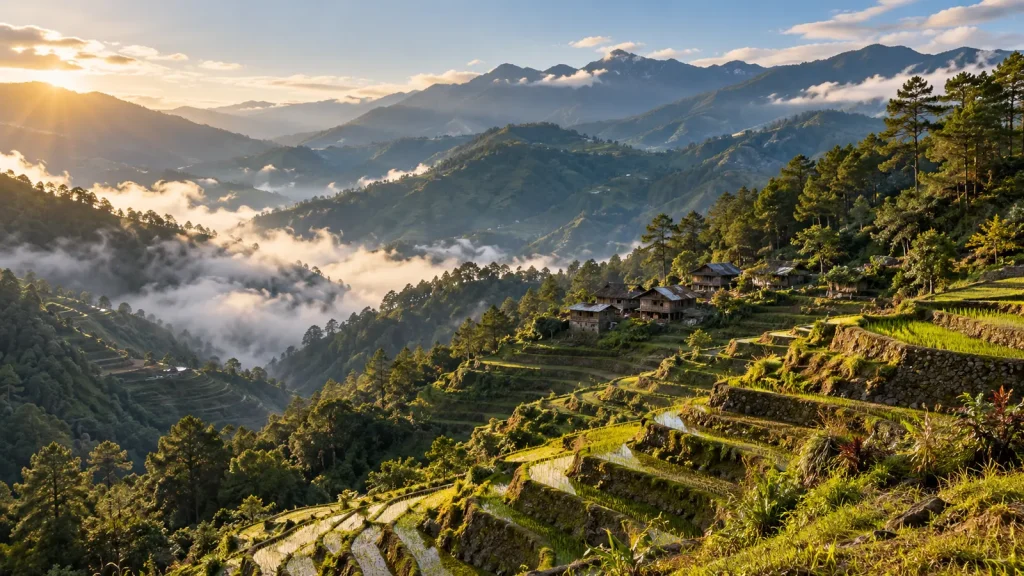
The identity is rooted in the Cordillera Central, the great mountain chain of northern Luzon. The present Cordillera Administrative Region contains Abra, Apayao, Benguet, Ifugao, Kalinga, and Mountain Province, with Baguio City as its regional center. Cultural territories, however, do not fit perfectly inside modern provincial borders. Communities and related language groups also extend into parts of Ilocos Norte, Ilocos Sur, La Union, Pangasinan, Nueva Vizcaya, Cagayan, and other neighboring areas.
Mountain geography shaped travel, farming, trade, settlement, and political life, but it did not seal communities away from one another. Cordilleran peoples exchanged goods with neighboring highland and lowland populations for centuries. Salt, rice, forest products, livestock, metal, pottery, and woven materials moved along trading routes. Migration, marriage, alliances, disputes, and shared ritual occasions also linked settlements while allowing strong local identities to remain.
Today, Igorot people live throughout the Philippines and overseas. Baguio is an important cultural and economic meeting place, but an Igorot life may also unfold in Metro Manila, another Philippine province, the Middle East, Europe, North America, or elsewhere in Asia. Residence away from an ancestral community does not automatically end a person’s relationship with family, language, land, or collective identity.
Where did the word “Igorot” come from?
The history of the name is not completely simple. Scholars commonly connect older forms such as Ygolot or Igorrote with a word related to golot, meaning a mountain range, and interpret the name broadly as referring to people of the mountains. Spanish authorities used versions of the term for populations living in the northern Luzon highlands that remained outside full colonial control.
That administrative label was never culturally neutral. Colonial officials often treated many different communities as one supposedly primitive population. Under American rule, bureaucratic classifications, photographs, exhibitions, school materials, and popular writing continued to portray Igorot people as objects to be studied or “civilized.” Igorot participants were displayed at the 1904 St. Louis World’s Fair in a colonial exhibition designed to present the United States as the guardian of supposedly less developed peoples.
These representations selected whatever appeared most exotic to an outside audience. Bare skin, tattoos, weapons, ritual practices, and the history of head-taking were separated from their social meanings and made to stand for whole communities. Meanwhile, farming expertise, trade, diplomacy, customary law, artistic knowledge, and political judgment were pushed out of the frame.
University of the Philippines Baguio research on the changing meaning of Igorot identity describes how an imposed and often demeaning category was later embraced as a language of collective dignity and resistance. This history is why the word can carry pain in one context and pride in another.
A brief history of the Igorot peoples and identity
There was no single ancient “Igorot kingdom” whose people all used that name. Before European colonization, the Cordillera contained many communities organized through villages, kinship, customary leadership, alliances, and local agreements. Their languages and institutions differed, and their strongest loyalties were generally connected with family, community, and territory rather than one pan-Cordilleran nation.
Highland life was never simply isolated. Communities developed systems of wet-rice terracing, swidden cultivation, forest management, livestock raising, weaving, pottery, woodwork, and metalwork according to local environments. Gold from the Cordillera helped sustain trade with lowland settlements, while salt, ceramics, tools, and other goods moved into the mountains. Conflict occurred, but so did negotiation, intermarriage, exchange, and peace-making.

| Period | What changed | Why it matters to Igorot identity |
|---|---|---|
| Before Spanish colonization | Distinct highland communities maintained their own territories, languages, customary institutions, farming systems, and trade relationships. | It reminds us that the peoples existed before the collective name and were never one culturally uniform society. |
| Spanish colonial period | Spanish expeditions sought gold, tribute, converts, and political control. Highland communities responded through resistance, avoidance, trade, negotiation, and selective cooperation. | Colonial records increasingly used names such as Ygolot or Igorrote for varied mountain populations outside full Spanish control. |
| American colonial period | The colonial government expanded direct administration, roads, schools, mining, mapping, censuses, photography, and ethnographic study. Mountain Province was established in 1908 as one large administrative unit. | Government categories brought distinct peoples under one bureaucratic frame while exhibitions and photographs spread stereotypes about an imagined single “Igorot tribe.” |
| Second World War and postwar decades | The Cordillera became a major wartime zone, bringing violence, displacement, shortages, and military movement. After the war, education, roads, migration, churches, government, mining, and commercial agriculture continued to transform daily life. | Shared regional institutions and movement between communities contributed to a wider awareness of the Cordillera, even as local identities remained strong. |
| 1970s and 1980s | Communities organized against the proposed Chico River dams, large logging concessions, and other projects that threatened land and livelihoods. | Resistance encouraged people from different provinces to act together as Kaigorotan and strengthened Igorot as a political identity. |
| 1987 to the present | The Cordillera Administrative Region was created in 1987. The Indigenous Peoples’ Rights Act followed in 1997, while debates over autonomy, development, mining, heritage, and ancestral domain have continued. | Igorot identity now operates locally, nationally, and across a global diaspora rather than belonging only to an old administrative category. |
Spanish expeditions did not create highland history
Older histories sometimes begin when Spanish writers first recorded mountain communities. That approach makes local people appear only when outsiders arrived. In reality, the newcomers entered landscapes already shaped by generations of settlement, farming, trade, ritual, conflict resolution, and environmental knowledge.
Spanish attempts to reach the Cordillera’s gold and bring communities under tribute and mission systems met sustained resistance. Colonial influence still reached the mountains through trade, military expeditions, missions, disease, changing boundaries, and relationships with lowland settlements. “Unconquered” should therefore not be misunderstood as “untouched.”
American rule changed both administration and representation
The American colonial state sought to govern the highlands more directly. The creation of the old Mountain Province in 1908 placed several distinct territories inside one administrative province. Roads, public schools, local offices, commercial mining, and new political institutions changed movement and opportunity, but they also expanded outside control over land and resources.
Photography and anthropology became tools of colonial government. Images often arranged people according to supposed “tribal types” and emphasized whatever looked different from American or lowland Filipino life. The 1904 St. Louis exhibition was the most famous example, but the same visual habit continued through books, postcards, museums, films, and tourism. It is important to read such images as products of power, not as neutral windows into an unchanged past.
Collective resistance strengthened the modern umbrella
After independence, separate provinces and communities faced common questions about dams, logging, mining, militarization, and control of natural resources. Opposition to the Chico River Dam Project became especially significant. It was led by affected Kalinga and Bontok communities rather than by an undifferentiated “Igorot tribe,” yet the struggle helped build solidarity across the wider Cordillera.
The killing of Kalinga leader Macli-ing Dulag in 1980 became a powerful symbol of the cost of defending ancestral land. His story should not replace the work of the many women, elders, organizers, villages, and allied communities involved in the movement. Together, these struggles helped transform Igorot from a label imposed from above into a collective identity that people could use to demand rights and define development on their own terms.
Which peoples are commonly included under the Igorot umbrella?
The following table is a guide, not a final ruling on anyone’s identity. Names, spellings, subgroup relationships, and geographic boundaries vary. A person’s self-identification is more authoritative than a tourist brochure or a generalized chart.
| People or identity | Area commonly associated with the name | Important clarification |
|---|---|---|
| Itneg or Tingguian | Abra and neighboring areas | Itneg is widely used as a community name; Tingguian appears frequently in older records. |
| Isneg or Isnag | Apayao and adjoining parts of northern Luzon | Isneg, Isnag, and the older place-based label Apayao may appear in different sources. |
| Kalinga | Kalinga Province and nearby areas | Kalinga contains many local communities; the name does not erase their linguistic and territorial differences. |
| Bontok or Bontoc | Central Mountain Province | The spelling Bontok often names the people or language, while Bontoc is also the municipality and provincial capital. |
| Kankanaey | Mountain Province, Benguet, and adjoining western areas | Northern and southern communities have notable linguistic and cultural differences. |
| Ibaloi or Ibaloy | Benguet, including areas around Baguio | Benguet is culturally diverse; Ibaloi should not be used as a name for every Indigenous person from the province. |
| Ifugao | Ifugao Province | Ifugao is itself internally diverse, including identities and languages such as Tuwali, Ayangan, and others. |
| Kalanguya or Ikalahan | Parts of Benguet, Ifugao, Nueva Vizcaya, and Pangasinan | The relationship between the names Kalanguya and Ikalahan depends on place and community usage. |
| Applai or Aplai | Parts of Mountain Province | Often discussed in relation to Kankanaey-speaking communities while maintaining a particular identity. |
| Balangao | Eastern Mountain Province | A distinct local ethnolinguistic identity sometimes lost in shorter six-group summaries. |
| Karao or I-Karao | Parts of Benguet | A smaller identity that demonstrates why provincial labels cannot replace community names. |
Other local identities and border communities may also take part in wider Cordilleran or Igorot life. The safest conclusion is not that there are exactly six, eight, or eleven “Igorot tribes.” It is that Igorot names a family of distinct peoples whose membership cannot be settled by one universal list.

What brings the Igorot peoples together?
The umbrella identity does not require cultural sameness. It works because people can recognize shared experiences while keeping their specific identities. Several connections are especially important.
A relationship with the Cordillera
The mountains are more than scenery. They contain settlements, watersheds, farms, pasture, forests, burial places, sacred locations, travel routes, and the remembered histories of families and communities. Land may be held or managed through arrangements that cannot be understood only as individual private property.
This relationship does not mean that every Igorot person farms or lives in a rural village. Rather, ancestral territory remains a source of identity, responsibility, rights, and political concern even for many people who live elsewhere.
Histories of resisting outside control
Cordilleran communities responded differently to Spanish and American expansion. They were never one united highland state, and it would be inaccurate to say that every community remained completely untouched by colonial rule. Yet difficult terrain, decentralized political organization, and determined local resistance prevented colonial authorities from controlling much of the region in the same way as many lowland areas.
That history later became part of a broader narrative of Cordilleran autonomy. During the twentieth century, communities again mobilized when dams, logging operations, mines, and other projects threatened land and livelihoods. Campaigns against major development projects, especially the proposed Chico River dams during the Marcos dictatorship, helped different peoples see the political strength of acting together.
Experience with prejudice and misrepresentation
Igorot people have been stereotyped as primitive, violent, uneducated, or less Filipino. Those ideas were produced through colonial administration and later repeated in textbooks, entertainment, jokes, tourism, and ordinary conversation. A shared experience of answering such prejudice gave the collective identity additional meaning.
Reclaiming the word Igorot can therefore be a declaration: a person does not accept the shame attached to the name by outsiders. Expressions such as Igorotak—“I am Igorot”—turn an old classification into a statement of belonging and confidence.
Political and cultural solidarity
Collective identity has helped communities advocate for ancestral-domain rights, regional autonomy, respectful education, cultural protection, and a voice in decisions about natural resources. Philippine law now uses the terms Indigenous Cultural Communities/Indigenous Peoples. The Indigenous Peoples’ Rights Act of 1997 recognizes rights concerning ancestral domains, self-governance, social justice, and cultural integrity.
A law does not automatically remove disputes or guarantee that every community controls what happens on its land. It does, however, provide an important legal language through which Indigenous Peoples can pursue recognition and challenge projects that affect them.
What the Igorot peoples do not all share
The easiest way to misuse an umbrella identity is to collect visible traditions from different peoples and call the mixture “Igorot culture.” That creates an imaginary culture that may belong fully to no community.
They do not speak one Igorot language
There is no single language called Igorot that everyone under the umbrella speaks. Bontok, Ibaloi, Ifugao languages, Isneg, Kalinga varieties, Kankanaey, Itneg varieties, Kalanguya, and other languages are distinct. Some are related more closely than others, and multilingualism is common. Ilocano, Filipino, and English may also be used in schools, work, trade, media, and mixed communities.
Calling these languages mere dialects of one “Igorot language” hides real differences. Language can identify a home area, kinship network, and community history even when a speaker also participates in the larger Igorot identity.
They do not have one traditional costume
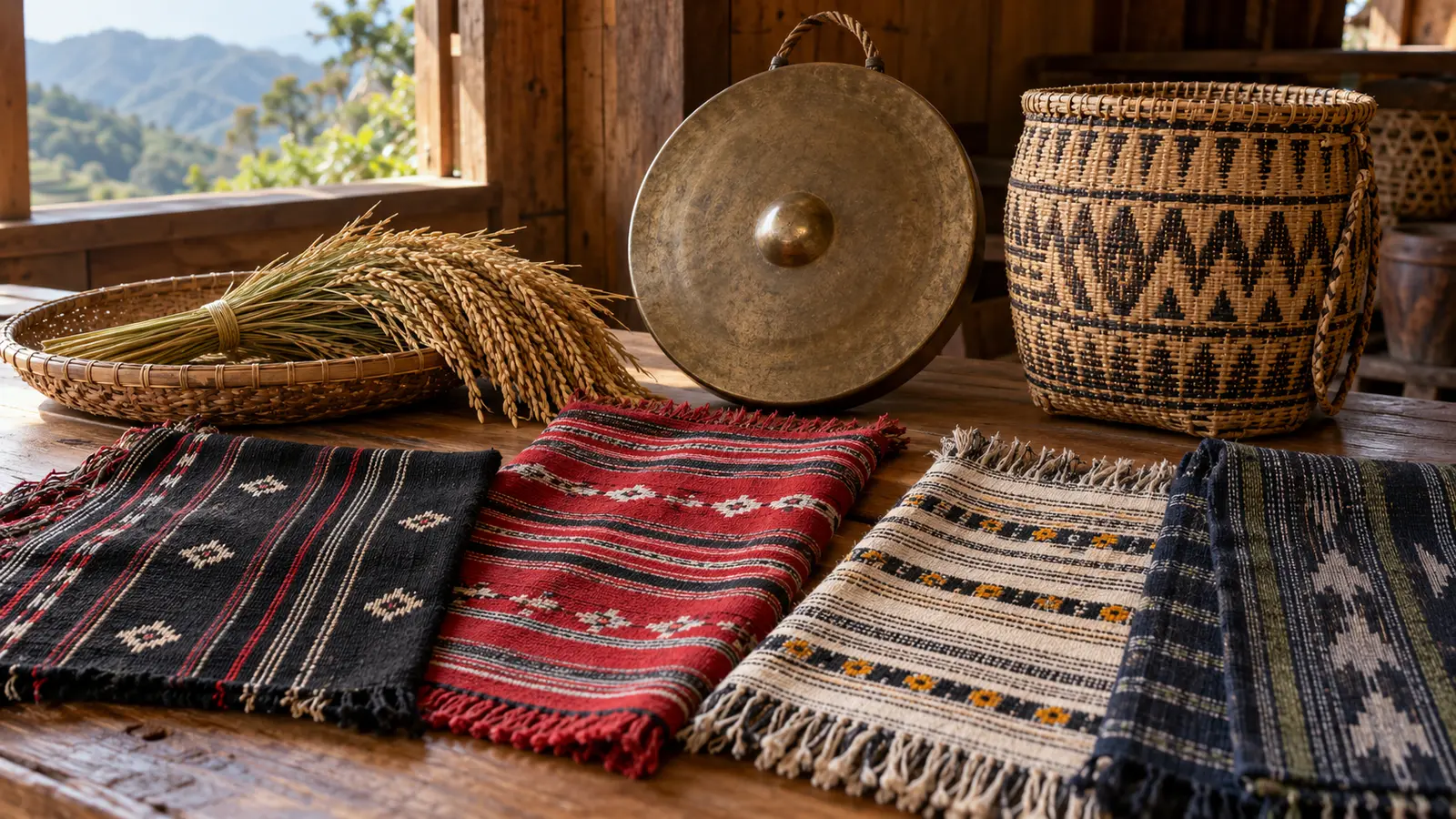
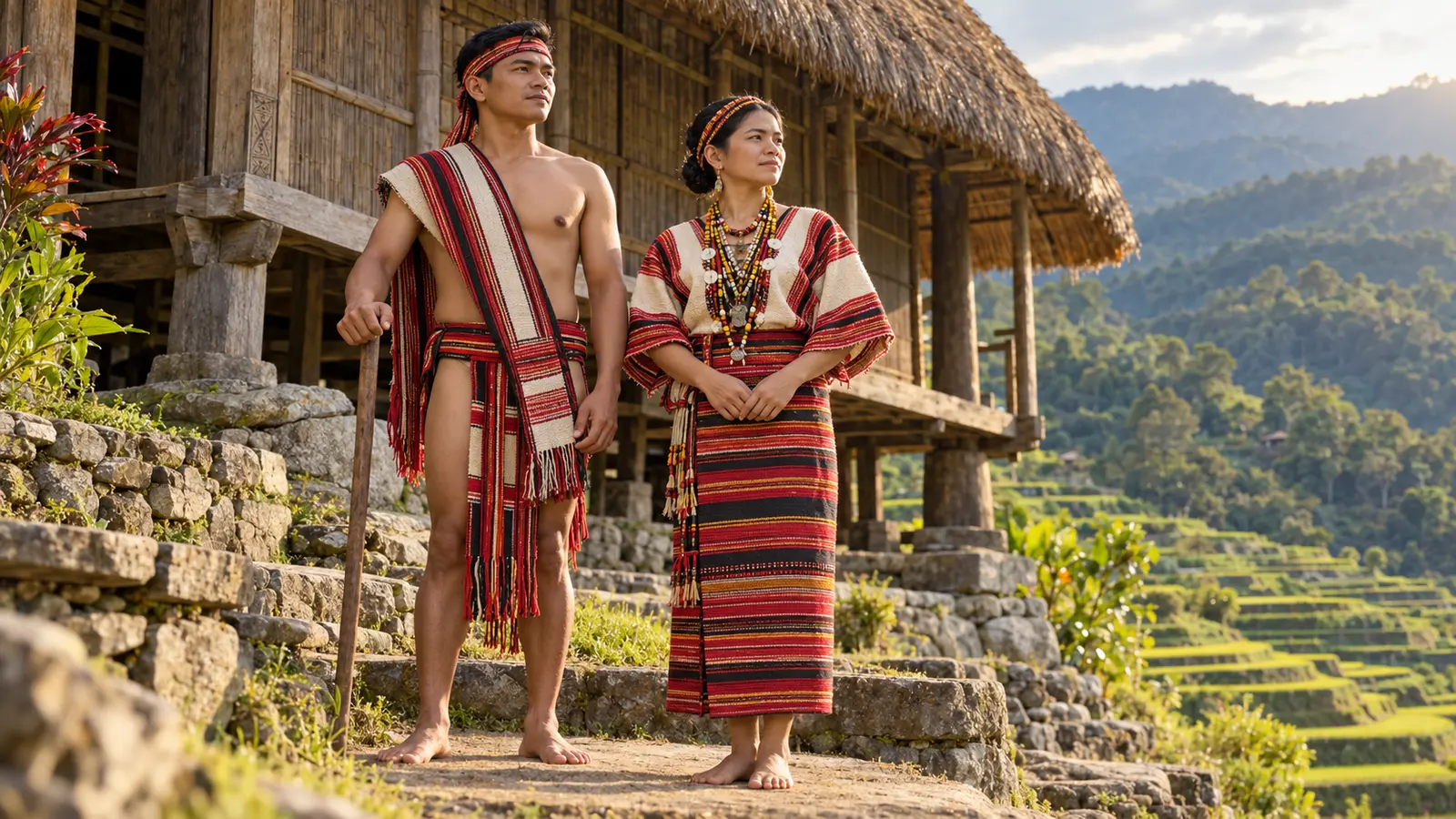
Woven textiles across the Cordillera vary in color, structure, material, pattern, meaning, and use. Clothing worn for a wedding, ritual, festival, formal photograph, or dance may not be everyday clothing. Some garments and designs communicate status, gender, age, community, or occasion.
Placing unrelated garments on performers and labeling the result “authentic Igorot attire” treats culture as decoration. Responsible presentation names the community, garment, maker, and occasion whenever that information is known.
They do not all build the same rice terraces
Terraced agriculture exists in several parts of the Cordillera, but the famous World Heritage rice terraces are specifically associated with Ifugao communities and their living systems of water, forests, soil, labor, ritual, and intergenerational responsibility. They should not be used as proof that all Igorot peoples farm in the same way.
Different elevations and environments support wet-rice terraces, swidden fields, vegetable farms, orchards, pasture, forest use, and other livelihoods. Modern wage work, business, public service, tourism, construction, education, and overseas employment are also part of Cordilleran economies.
They do not share one customary government
The bodong peace-pact system is strongly associated with Kalinga communities. Institutions called ato, dap-ay, or related names appear in parts of Mountain Province, but their structure and functions vary. Leadership, dispute settlement, landholding, and ritual authority follow different histories from one community to another.
Customary institutions also interact with barangays, municipalities, provincial governments, churches, schools, courts, and national law. They are not sealed systems operating exactly as they did centuries ago.
They do not practice one religion
Indigenous ritual traditions remain meaningful in many communities, but Christianity has had a strong presence in the Cordillera for generations. People may identify with Catholic or Protestant churches, Indigenous spiritual practices, both in different ways, or neither. Religious change does not provide a simple test of whether someone is “truly Igorot.”
Culture is specific, shared, and always changing
It is possible to recognize connections without turning them into universal rules. Flat gongs, often called gangsa, are important in many Cordilleran musical traditions, but ensembles, rhythms, dances, and occasions differ. Backstrap weaving appears widely, but designs and garments remain community-specific. Oral literature includes the Ifugao Hudhud chants and Kalinga ullalim, yet neither belongs to all Igorot peoples.
Traditional houses also vary. An Ifugao house is not simply an “Igorot house” that can represent the entire region. Tattooing has particular histories and meanings in communities such as Kalinga, but it is not a universal marker of Igorot identity. Even the popular image of a village elder, a gong player, or a terrace farmer shows only one part of a much larger society.
Culture survives not by remaining motionless but by being practiced, debated, taught, and adapted. A woven textile may be worn in a ceremony, displayed in a home, studied by a young designer, sold by a community enterprise, or used to express identity abroad. The context changes, and questions of consent, attribution, and benefit become especially important.
From an imposed label to a claimed identity
The modern power of Igorot lies partly in its reversal. Colonial institutions used the term to classify mountain peoples as different and supposedly inferior. Many descendants now use it to express the opposite: dignity, shared history, political awareness, and a right to speak for themselves.
This reclamation did not erase local identities. A Kankanaey person does not have to stop being Kankanaey to join a wider Igorot organization. An Ifugao living abroad may use Ifugao when speaking about language and home, Igorot when building solidarity with other Cordillerans, and Filipino in a national setting. Identity can operate at several levels without becoming dishonest.
Nor does everyone have to use the umbrella with the same enthusiasm. Some people prefer Cordilleran. Some prioritize a town, province, language, or ethnolinguistic name. Some embrace Igorot publicly, while others understand its history but do not make it their primary identity. Respect begins by listening rather than assigning the label to someone.

Igorot identity today
Contemporary Igorot identity appears in many places: local government, universities, community schools, music, film, literature, visual art, environmental campaigns, pageants, sports, social media, and hometown associations. Young people may learn a heritage language, perform contemporary music using Cordilleran sounds, study family history, challenge stereotypes online, or return to help document community knowledge.
Diaspora organizations can connect people who come from different parts of the Cordillera. Gatherings may include food, music, dance, religious services, fundraising, discussions of community issues, and support for relatives at home. These events can strengthen collective identity, but organizers still face the challenge of representing diversity rather than selecting one highly visible tradition for everyone.
Modern life also creates difficult questions. Who may reproduce a textile design? When does tourism become cultural performance for outsiders? Who receives income when Indigenous art is sold? Can knowledge be recorded publicly, or is it restricted to particular families, elders, seasons, or rituals? There is no single Igorot answer because authority and protocol belong to communities.
Common myths about the Igorot peoples
Myth 1: Igorot is one tribe
Reality: It is a collective identity associated with several distinct peoples. A summary that calls everyone simply “the Igorot tribe” removes the names that people use for themselves.
Myth 2: Igorot and Ifugao mean the same thing
Reality: Ifugao is a more specific identity and province. Ifugao people may be included within the wider Igorot or Cordilleran umbrella, but not every Igorot is Ifugao.
Myth 3: All Igorot people are rice-terrace farmers
Reality: Terraced farming is important in particular communities, but environments and livelihoods vary widely. Many Igorot people work in towns, cities, other regions, or overseas.
Myth 4: Traditional clothing is everyday clothing
Reality: Heritage garments may be used for ceremonies, celebrations, performances, formal events, or personal expression. Most people also wear the same contemporary clothing found elsewhere in the Philippines.
Myth 5: Culture disappears when people modernize
Reality: Education, technology, migration, or Christianity does not automatically cancel Indigenous identity. Culture can remain meaningful while people make new choices and respond to new conditions.
Myth 6: One cultural performance can represent the entire Cordillera
Reality: A dance, rhythm, garment, chant, or ritual comes from a specific context. Combining pieces from several communities without explanation may entertain an audience, but it is not an accurate cultural record.
How to write or speak about Igorot people respectfully
- Use the plural when discussing the umbrella. “Igorot peoples” makes internal diversity more visible than “the Igorot tribe.”
- Use a specific community name when known. Write Ifugao, Kalinga, Bontok, Ibaloi, or another appropriate identity instead of making Igorot do all the work.
- Ask how a person identifies. Do not correct someone’s identity using a map, census label, or textbook.
- Name the source of a tradition. A Kalinga tattoo tradition or Ifugao chant should not be presented as universal Igorot culture.
- Avoid words such as primitive, untouched, or vanishing. They place living people outside the present.
- Do not treat clothing as a costume. Give garments, makers, occasions, and community protocols the same care you would give any valued cultural property.
- Request permission. Photography, recording, entry into a ritual space, or reproduction of a design may require consent.
- Include present-day concerns. Land, mining, dams, climate change, education, language transmission, employment, and representation are part of culture too.
Frequently asked questions
Is Igorot a tribe?
Not in the sense of one uniform ethnic group. Igorot is an umbrella identity for several Indigenous Peoples connected with the Cordillera. Calling it one tribe hides important differences.
What does Igorot mean?
The word is commonly connected with older terms referring to mountains or mountain people. Its historical meaning was shaped by Spanish and American classification, while many people later reclaimed it as a proud collective identity.
Is the word Igorot offensive?
It can be offensive when used as an insult or attached to stereotypes. At the same time, many people proudly identify as Igorot. Meaning depends on speaker, intention, context, and self-identification. Respectful use does not treat the word as a joke or replace a more specific community name when one is known.
What is the difference between Igorot and Cordilleran?
The terms overlap but are not perfectly identical. Cordilleran can mean anyone from the geographic or administrative Cordillera, including residents who are not Indigenous. Igorot usually refers to Indigenous collective identity rooted in the region. Individual preferences still vary.
Are all Igorot people from Benguet?
No. Benguet is only one part of the wider Cordillera. Igorot peoples are connected with Abra, Apayao, Benguet, Ifugao, Kalinga, Mountain Province, and neighboring areas.
Are Igorot languages dialects of one language?
No. The Cordillera contains several distinct languages and language varieties. People may also speak Ilocano, Filipino, English, or other languages depending on place and circumstance.
Are all Igorot people Indigenous?
Igorot identity refers to Indigenous Peoples of the Cordillera. However, not everyone who lives in the Cordillera is Igorot, and self-identification matters. Geographic residence alone is not enough to assign the identity.
Is Igorot the same as Lumad?
No. Igorot is associated with the Cordillera of northern Luzon. Lumad has been used collectively for many non-Moro Indigenous Peoples of Mindanao. Both are umbrella terms, but they refer to different regions, histories, and peoples.
An identity held in both unity and difference
The most accurate answer to “Who are the Igorot?” begins with a seeming contradiction: the Igorot peoples are connected, but they are not all the same. The umbrella exists because shared geography, colonial classification, prejudice, political struggle, and cultural pride created reasons to stand together. It remains meaningful because that unity does not have to erase Ifugao, Kalinga, Bontok, Ibaloi, Kankanaey, Isneg, Itneg, Kalanguya, Applai, Balangao, Karao, and other identities.
Igorot is therefore more than an old word for mountain people. For many, it is a chosen statement about ancestry, dignity, responsibility, and belonging. Understanding it requires the humility to learn the collective history while still asking the most important question: Which people, which community, and whose own voice?
Transparency
Sources & references
- University of the Philippines Baguio — Unraveling Identities: Igorotness and “Igorotak” T-Shirts
- University of the Philippines Baguio — Re-examining Igorot Representation through Material Culture
- National Commission for Culture and the Arts — Glimpses: Peoples of the Philippines
- Lawphil — Republic Act No. 8371: Indigenous Peoples’ Rights Act of 1997
- UNESCO — Climate Resilience Rooted in Ifugao Traditional Knowledge
Editorially reviewed
Editorial information
SOAKJAM articles are designed for clarity, useful context and transparent sourcing. Important facts should be checked against the linked primary sources.
Found an error, outdated detail or a useful source we should consider?