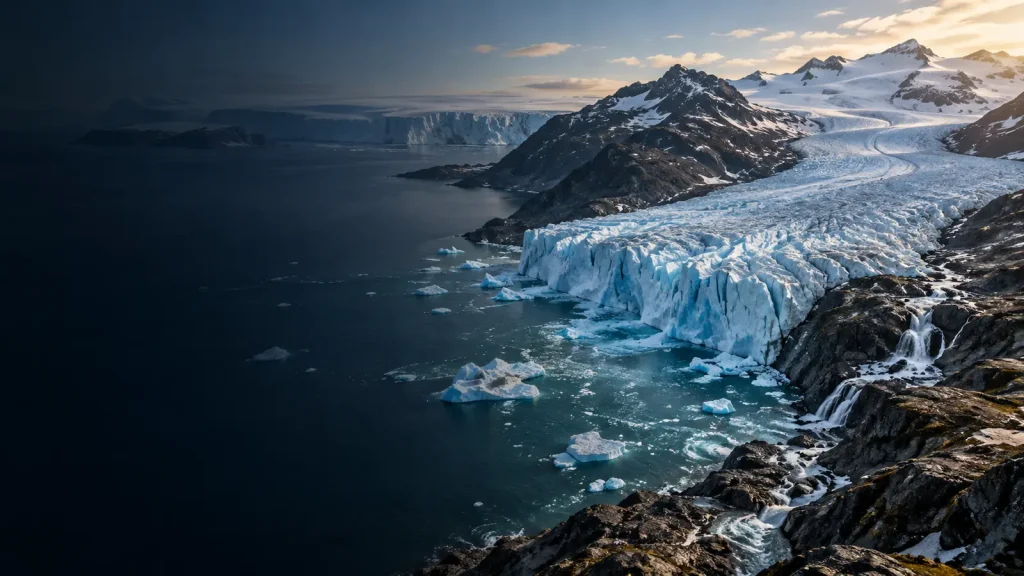

The ocean can look unchanged from the shore even while its physical state is shifting. That makes ocean heating easy to underestimate. To understand why are oceans getting warmer, it helps to see the ocean as Earth’s largest working heat reservoir rather than as a blue background on a map.
Water absorbs energy, moves it through currents and mixes it to different depths. This slows the warming of the air, but it does not make the energy disappear. Added ocean heat affects sea level, marine ecosystems, weather patterns and the people whose food, income or safety depends on the sea.
Quick answer: The central explanation for why are oceans getting warmer is that human-produced greenhouse gases have created a planetary energy imbalance. The ocean takes up most of the excess heat. Natural cycles redistribute that heat from year to year, but they do not explain the long-term rise in ocean heat content.
Ocean warming at a glance
| Process | What happens | Why it matters |
|---|---|---|
| Heat uptake | The upper ocean absorbs energy from the atmosphere and sunlight | It moderates air warming while storing the imbalance |
| Mixing and circulation | Winds, currents and sinking water move heat horizontally and downward | Warming differs by region and depth |
| Thermal expansion | Seawater occupies more volume as it warms | It contributes to global sea-level rise |
| Marine heatwaves | Ocean temperatures remain unusually high for a location and season | Ecosystems and fisheries may receive little recovery time |
| Stratification | Warm, lighter surface water mixes less readily with cooler deep water | Nutrients and oxygen can be affected |
| Natural variability | El Niño, La Niña and other patterns rearrange stored heat | Individual regions and years can differ from the long-term trend |
Why Are Oceans Getting Warmer Over Time?
Earth receives energy from the Sun and releases infrared energy to space. Greenhouse gases such as carbon dioxide and methane slow that outward flow. Human activities have increased their concentration, so the planet is retaining more energy than it emits.
The atmosphere and land warm, ice melts and the ocean gains heat. Because the ocean covers most of the planet and water has a high heat capacity, it can absorb an enormous amount of energy with a smaller temperature change than the same energy would produce in air. The relatively modest-looking change in average seawater temperature therefore represents a very large store of heat.
NASA’s overview of ocean warming explains that the ocean has absorbed the great majority of the excess heat associated with planetary warming. This is one reason ocean heat content is a powerful indicator of long-term climate change.
How scientists measure ocean heat
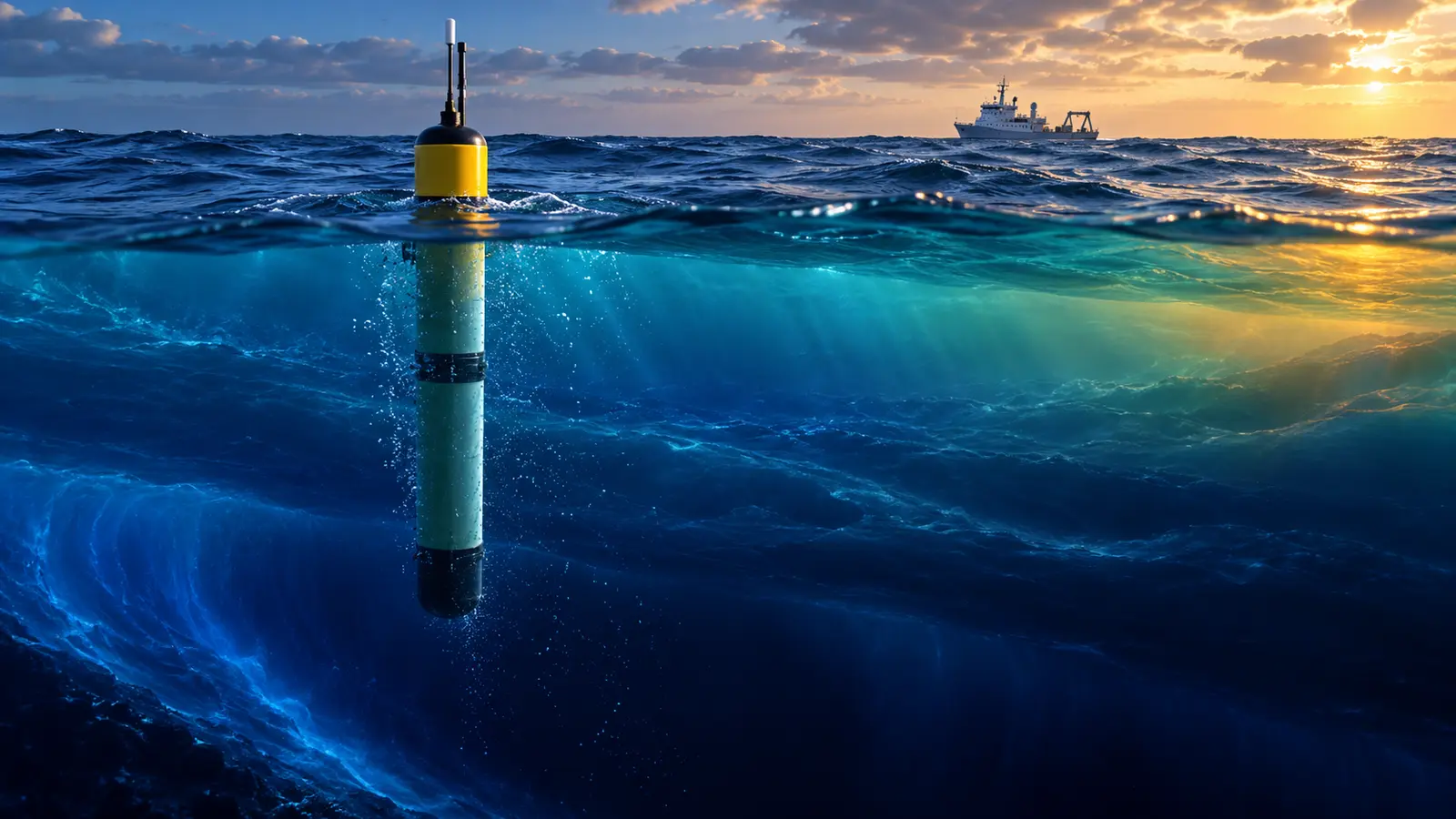
A sea-surface thermometer tells only part of the story. Researchers need temperatures at many depths and locations, repeated over time. Ships, moored buoys, drifting instruments, satellites, autonomous underwater vehicles and profiling floats all contribute.
The international Argo program operates thousands of robotic floats. A typical float sinks, drifts, descends deeper and then rises while measuring temperature and salinity. It transmits the profile by satellite before repeating the cycle. Deep Argo and biogeochemical programs extend what can be observed.
Satellites measure the sea surface rather than the full water column. They reveal broad patterns in surface temperature, sea-surface height, winds and other variables. Tide gauges and satellite altimeters also detect sea-level change. Researchers combine these systems and account for instrument changes and incomplete historical coverage.
That network gives a more reliable answer to why are oceans getting warmer than any single warm beach or cool season could provide. The signal appears across independent measurements and through the depth of the ocean, although coverage and uncertainty vary.
Why the surface and deep ocean do not warm equally
Most heat enters near the surface, where the ocean exchanges energy with the atmosphere. Winds stir the upper layer. Waves, storms, evaporation and currents help determine how deeply that warmth mixes. Below the mixed layer, circulation can carry heat into the ocean interior.
Geography matters. Warm currents transport tropical energy toward higher latitudes; cold currents bring deeper water toward the surface. Strong winds can expose cooler subsurface water through upwelling. In places where surface water becomes dense enough to sink, heat can reach great depths. Continents, seafloor shape and salinity all influence the pathways.
As the surface warms, it often becomes lighter relative to deeper water. This stronger layering, called stratification, can resist vertical mixing. The result is not simply “warm water on top” everywhere. Regional winds and currents can strengthen or weaken the effect, and some deep waters respond over decades or centuries.
Ocean heat content versus sea-surface temperature
Sea-surface temperature describes a thin upper layer and is closely connected to weather, coral stress and conditions experienced by marine life. Ocean heat content estimates the energy stored through a much thicker depth. The two are related but not interchangeable.
A windy season can mix surface warmth downward and temporarily cool the surface while total stored heat remains high. An El Niño event can release more ocean heat to the atmosphere and raise global surface temperature. Long-term ocean heat content filters out some of that short-term noise.
When discussing why are oceans getting warmer, scientists therefore examine both measures. Surface records show where marine conditions are changing now; depth-integrated records show how much energy the climate system is accumulating.
What is a marine heatwave?
A marine heatwave is a period when local ocean temperature is unusually high compared with the normal seasonal range. It is defined relative to a place and time of year, not by one universal temperature. Tropical organisms may be stressed by a small departure from their usual conditions, while species in variable temperate waters may tolerate a wider range.
Weather patterns can reduce winds, increase sunshine or limit mixing. Currents may transport warmer water into a region. Climate change raises the background temperature, making high thresholds easier to cross and some events more severe or persistent.
The term should not be used for every warm reading. Duration, geographic extent and departure from a historical baseline matter. Monitoring agencies also update baselines carefully because a rapidly warming reference period can make today’s extremes look deceptively ordinary.
Coral reefs and bleaching
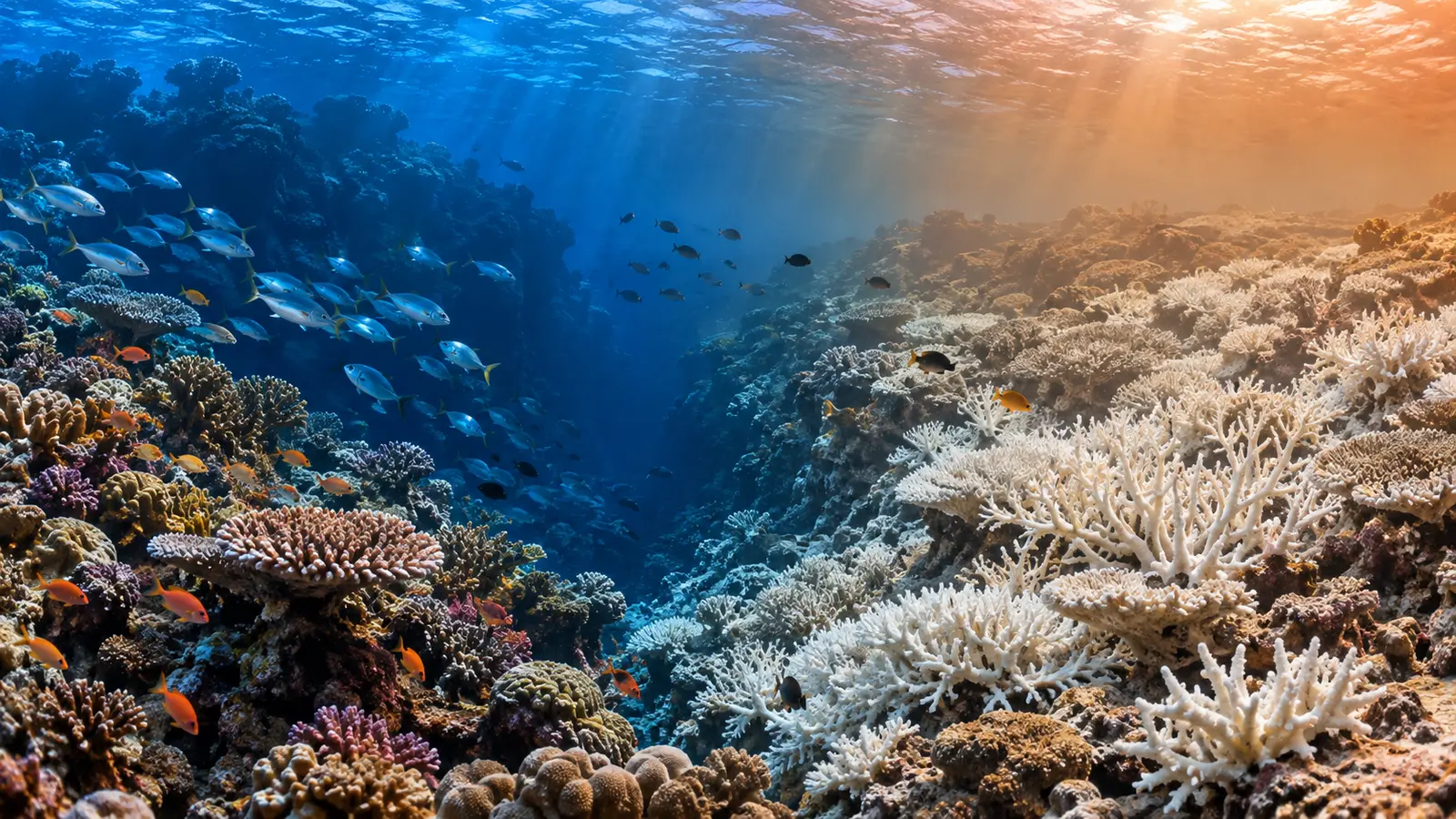
Reef-building corals live in partnership with microscopic algae that provide much of their energy. Prolonged heat stress can disrupt that relationship, causing corals to expel the algae and appear pale or white. A bleached coral is not automatically dead, but it is under stress and can starve or become more vulnerable to disease if high temperatures persist.
The NOAA Coral Reef Watch program uses satellite and field information to monitor accumulated heat stress. Local actions—reducing polluted runoff, destructive fishing and direct physical damage—can improve resilience, but they cannot shield reefs from unlimited ocean warming.
Ocean acidification is a separate but related carbon dioxide problem. When seawater absorbs carbon dioxide, chemistry changes and pH declines. Warming and acidification can act together, yet one is not simply another name for the other.
Oxygen, nutrients and the ocean food web
Warm water can hold less dissolved oxygen than cold water. Stronger stratification can also reduce the exchange that brings oxygen downward and nutrients upward. At the same time, biological processes consume oxygen. These mechanisms contribute to deoxygenation in parts of the ocean, though local pollution and circulation changes can be equally important in coastal zones.
Plankton, fish and marine mammals respond to temperature, oxygen, food and habitat together. Some species move poleward or into deeper water. Others cannot move because they depend on reefs, seafloor habitat or a particular breeding area. When predators and prey shift at different speeds, familiar food webs may be disrupted.
This ecological chain helps explain why why are oceans getting warmer is also a question about food and livelihoods. A change measured offshore may reach fishing crews, processors, markets and households far inland.
Fisheries and coastal communities
Fish do not respect national boundaries. As suitable conditions shift, a stock historically managed by one country may spend more time in another country’s waters. Catch seasons can change, traditional knowledge may become less predictive and small vessels may be unable to follow species safely.
A warmer ocean does not mean every fishery declines everywhere. Some high-latitude regions may see temporary gains as species arrive. Benefits can be uneven and uncertain, while tropical communities that contributed little to global emissions may face large losses. Management must be flexible enough to update quotas, protect nursery habitat and share changing resources fairly.
How ocean warming raises sea level
When seawater warms, it expands. This thermal expansion is one major contributor to global sea-level rise. Melting land ice adds water and is another major contributor. Melting floating sea ice has little direct effect on sea level, although it affects climate and ecosystems.
Sea level does not rise by exactly the same amount at every coast. Land may sink or rise; currents and winds redistribute water; gravity changes as large ice masses shrink. The companion guide on what causes sea-level rise examines those local differences and adaptation choices.
Does warm water make hurricanes stronger?
Tropical cyclones draw energy from warm ocean water, but warm water alone does not create a storm. Atmospheric moisture, wind shear, existing disturbances and the depth of the warm layer also matter. Climate change is expected to increase rainfall rates and the proportion of the strongest storms, while total storm numbers may not increase in every basin.
Sea-level rise makes storm surge more damaging because the surge begins from a higher baseline. Rapid intensification remains an active area of research and forecasting. It is responsible to discuss changing probabilities and physical ingredients, not to claim that greenhouse gases single-handedly caused a named cyclone.
El Niño, La Niña and long-term warming
During El Niño, unusually warm surface water spreads across parts of the central and eastern tropical Pacific, and more stored heat can enter the atmosphere. La Niña strengthens a different pattern, with cooler surface conditions in that region and greater heat storage in parts of the ocean.
These cycles answer why one year or region differs from another. They do not answer why are oceans getting warmer over many decades. The long-term energy gain continues beneath the rearrangement. Read SOAKJAM’s full guide to El Niño and La Niña for the circulation behind the cycle.
Can the ocean keep absorbing heat forever?
The ocean will continue exchanging heat with the atmosphere, but that is not a harmless service. Heat uptake changes the ocean itself and commits the climate system to long-lasting effects. Deep water releases heat slowly, so some consequences continue even after emissions decline.
There is also no simple fixed date when the ocean becomes “full.” Uptake depends on future emissions, mixing and circulation. The useful question is how much additional heat and damage society chooses to avoid by reducing the energy imbalance.
Three common misunderstandings
First, people sometimes answer why are oceans getting warmer by pointing only to hot air above the sea. Air-sea exchange matters, but the larger cause is the whole planet’s energy imbalance. Sunlight, evaporation, winds, clouds and currents control where and when the ocean gains energy; greenhouse gases change the balance that drives the long-term accumulation.
Second, a record-high sea-surface temperature is not proof that every layer below is breaking a record on the same day. Surface conditions can change rapidly. Deep-ocean measurements respond more slowly and remain less complete, especially before the modern float network. Scientists report the uncertainty instead of assuming that missing historical observations were identical to today.
Third, ocean warmth does not simply spread like dye in still water. Earth rotates, winds push the surface, salt changes density and continents redirect currents. That complexity explains regional surprises; it does not invalidate why are oceans getting warmer as a global question. The net heat gain emerges after scientists combine many regions and depths.
Why the pace of change matters
Marine organisms have survived large climate changes over Earth’s history, but survival depends on speed, available habitat and the presence of other pressures. A population may adapt genetically, move, change its timing or fail. Coastal development, pollution and overfishing can remove the pathways that would otherwise help it adjust.
Communities face a similar problem. A gradual, predictable shift is easier to plan for than repeated surprises. Harbors, aquaculture farms, tourism businesses and seafood supply chains are built around expected ranges. Understanding why are oceans getting warmer is useful because it turns an abstract global trend into decisions about monitoring, flexible management and investment before a crisis arrives.
What reduces the risk?
The fundamental solution is to reduce net greenhouse-gas emissions rapidly and deeply. Clean electricity, efficiency, electrification, methane controls, lower-carbon industry and protection of natural carbon stores all contribute. Carbon removal may balance a limited amount of residual emissions, but it cannot restore every lost reef or reverse every deep-ocean change quickly.
Adaptation is also necessary. Coastal communities can improve marine heatwave warnings, protect connected habitats, reduce local pollution, diversify livelihoods and use climate information in fisheries management. Marine protected areas can reduce some pressures when well designed and enforced, though they are not thermal barriers.
How to read ocean headlines carefully
- Check whether a claim concerns the sea surface or heat stored through depth.
- Ask whether “record” means global, regional, daily, monthly or annual.
- Look for a stated baseline and a long enough comparison period.
- Separate a marine heatwave from the long-term trend that makes it more likely.
- Distinguish observed change from a model projection.
- Treat one buoy, beach or season as local evidence—not the whole ocean.
NOAA’s global ocean heat-content record and the World Meteorological Organization’s annual climate assessments are useful starting points. Good reports state uncertainty rather than hiding it.
Frequently asked questions
Why is the ocean warming more slowly than the air?
Water requires much more energy than air to produce the same temperature increase, and it can mix heat downward. Slower temperature change does not mean less importance; the stored energy is enormous.
Is every ocean region getting warmer?
No. The global trend is upward, but currents, winds, sea ice and natural variability create regional differences. Some areas can cool for years while the ocean as a whole gains heat.
Can a cool summer disprove ocean warming?
No. A season is a short local interval. Climate trends require broad measurements over decades and through depth.
Does ocean warming cause sea-level rise?
Yes. Thermal expansion raises global mean sea level, while melting glaciers and ice sheets add more water. Local relative sea level also depends on land movement and circulation.
Will all marine species move toward the poles?
No. Species differ in mobility, habitat and tolerance. Coastlines, currents, oxygen and food can block or redirect movement, and some organisms cannot relocate.
Can planting mangroves stop ocean warming?
Mangroves store carbon, support fisheries and reduce some coastal hazards, but their area is limited. They are valuable alongside—not instead of—deep global emissions cuts.
Conclusion
The durable answer to why are oceans getting warmer is a human-driven energy imbalance, not a single current or unusual season. The ocean has buffered atmospheric warming by taking up most of the excess energy, but that service carries costs: expansion, marine heatwaves, ecosystem stress, shifting fisheries and changes that persist for generations.
Better observation can show where heat is going, and local protection can give ecosystems and communities more room to cope. Yet monitoring and adaptation do not replace the central task. Reducing greenhouse-gas emissions limits how much additional heat the ocean must absorb—and how difficult the consequences become.
Transparency
Sources & references
- NASA — Ocean Warming
- NOAA NCEI — Global Ocean Heat and Salt Content
- Argo — International ocean-observing program
- WMO — State of the Global Climate reports
- IPCC — Special Report on the Ocean and Cryosphere
- NOAA Coral Reef Watch
- UNESCO-IOC — Global Ocean Observing System
- NOAA Ocean Acidification Program
- IPCC AR6 Working Group I
Editorially reviewed
Editorial information
SOAKJAM articles are designed for clarity, useful context and transparent sourcing. Important facts should be checked against the linked primary sources.
Found an error, outdated detail or a useful source we should consider?