
A glacier may appear permanent because its movement is slow and its lifetime is longer than ours. In reality, it is a flowing reservoir that gains snow and loses ice every year. The clearest answer to why are glaciers melting is that warmer air and, in some places, warmer ocean water are pushing ice loss beyond the snowfall that replaces it.
The details matter. A mountain glacier is not the same as an ice sheet, floating sea ice or frozen ground. Each responds differently and affects people in different ways. Knowing those differences turns a dramatic photograph into a useful understanding of water, sea level and climate risk.
Quick answer: To understand why are glaciers melting, compare accumulation with loss. Glaciers grow when compacted snowfall adds more mass than melting, evaporation, iceberg break-off and ice flow remove. Human-driven warming has shifted that balance toward sustained loss across most observed regions.
Why Are Glaciers Melting? Key Processes at a Glance
| Frozen feature | Where it forms | Direct effect when it melts |
|---|---|---|
| Mountain glacier | Snow compressed on land over many years | Adds water to the ocean and changes seasonal river flow |
| Ice sheet | Continental-scale land ice in Greenland and Antarctica | Raises global sea level as mass is lost |
| Ice shelf | Floating extension of an ice sheet | Little direct sea-level rise, but loss can let inland ice flow faster |
| Sea ice | Frozen ocean water | Little direct sea-level rise; major effects on albedo, ecosystems and circulation |
| Snow cover | Seasonal or persistent snow on land | Changes water timing and surface reflectivity |
| Permafrost | Ground that stays frozen for at least two consecutive years | Damages infrastructure and can release greenhouse gases when it thaws |
What makes a glacier a glacier?
A glacier begins where snow survives summer after summer. New layers compress older snow into granular firn and then dense ice. Gravity causes that ice to deform and flow downhill or outward. Even a glacier that looks motionless is moving, sometimes by sliding over its bed.
The upper accumulation zone usually gains more snow than it loses. The lower ablation zone usually loses mass through surface melt, evaporation and the release of icebergs where the glacier reaches water. The equilibrium line separates them. Its altitude shifts with weather and climate.
Scientists call the annual difference between gains and losses the glacier’s mass balance. One snowy winter can produce a positive year without reversing decades of decline. Long records across many glaciers are more informative than a single photograph or season.
Warm air changes the surface balance
Higher air temperature lengthens the melt season and raises the elevation at which snow can survive. More winter precipitation may fall as rain instead of snow. Earlier spring melt exposes darker ice and ground for longer, allowing them to absorb more sunlight.
Fresh snow reflects much of the sunlight that reaches it. Older ice is darker, especially when dust, soot or algae collect on the surface. When bright snow retreats, the lower reflectivity—called albedo—can amplify local melting. This feedback strengthens an initial warming; it did not create the greenhouse-gas increase that began the modern trend.
These processes are central to why are glaciers melting, but the same temperature rise does not produce identical loss everywhere. Elevation, slope, cloud cover, debris, snowfall and the direction a glacier faces all modify its response.
Warm oceans can melt ice from below
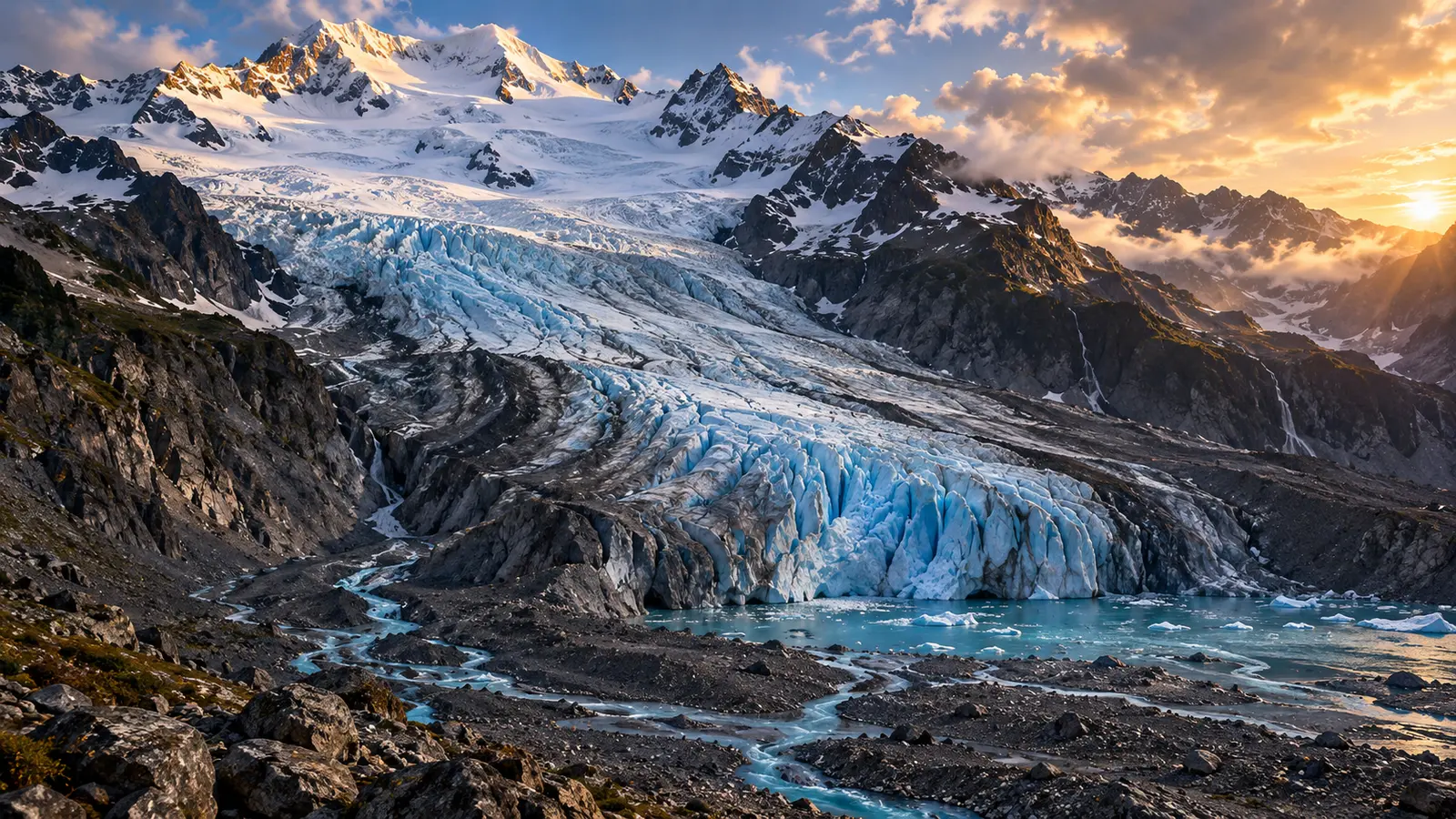
Marine-terminating glaciers and ice shelves meet the ocean. Relatively warm water can enter cavities beneath floating ice and melt it from below. That thinning may weaken an ice shelf or reduce the resistance it provides to inland ice.
An ice shelf already floats, so its own melting has little direct effect on sea level, just as melting ice in a full glass changes the level only slightly. Its indirect role can be large. When a shelf breaks up, glaciers behind it may accelerate, moving grounded ice into the ocean more quickly.
Greenland experiences extensive surface melt as well as iceberg discharge and ocean-driven change around outlet glaciers. Antarctica is colder overall, but warm water beneath some ice shelves is an important source of loss. The geography and mechanisms differ, so headlines should not treat both ice sheets as one simple block.
Ice flow can accelerate loss
Meltwater can reach a glacier’s bed through cracks and shafts, changing friction. Retreat can move the glacier front into deeper water or onto a bed that slopes downward inland, allowing instability. The shape of valleys and the seafloor can either slow or encourage retreat.
This dynamic response helps explain why are glaciers melting faster in some locations than surface temperature alone would suggest. It also makes short-term prediction difficult. Scientists need ice thickness, bed shape, ocean temperature and flow speed—not just air temperature.
How scientists measure shrinking ice
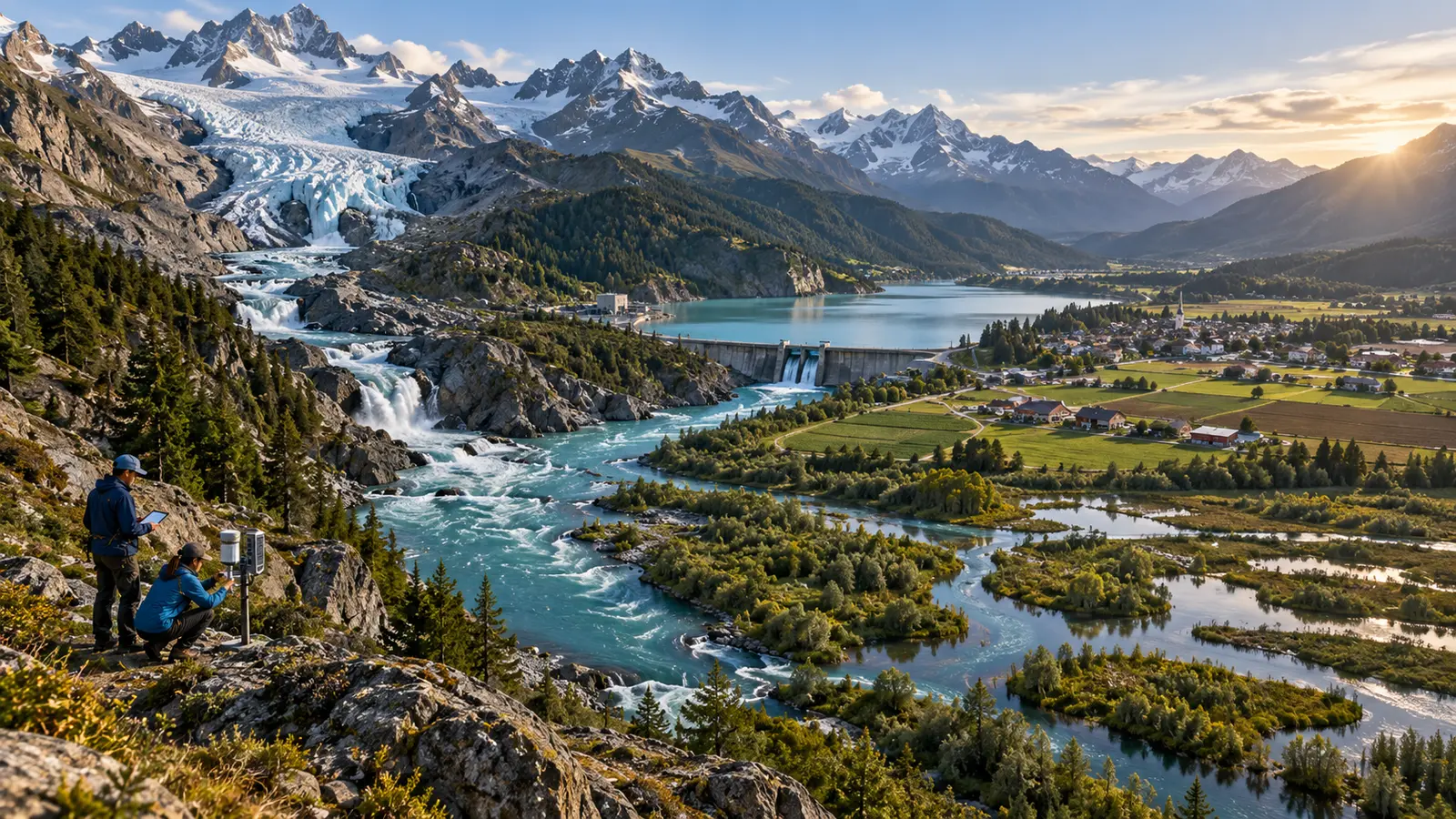
Field teams place stakes in the ice, dig snow pits and measure density to estimate local mass balance. Automatic weather stations track temperature, snowfall and radiation. GPS instruments record surface motion.
Aircraft and satellites map changing area, elevation and speed. Radar can see through ice to estimate thickness and the shape of the bed. Laser altimetry measures height; satellite gravity missions detect changes in mass over broad areas. Photographs are valuable evidence, but scientists align viewpoints and seasons before comparing them.
The World Glacier Monitoring Service combines standardized observations from glaciers worldwide. NASA and other agencies add satellite records, while the National Snow and Ice Data Center explains how continental ice sheets are observed.
Why some glaciers briefly advance
A glacier can advance when snowfall increases, melt decreases or internal ice dynamics push the front forward. A surging glacier may move rapidly for reasons related to water pressure and its bed even while losing mass overall. Local volcanic debris or thick rock cover can insulate ice.
These exceptions do not disprove global loss. They show why area, length and mass are different measurements. A glacier can advance at its front while thinning, or retreat while temporarily gaining snow high above. The long-term, multi-region record is the appropriate scale for answering why are glaciers melting.
What glacier loss means for sea level
Land ice adds water to the ocean when it melts or breaks away. Mountain glaciers and the Greenland and Antarctic ice sheets all contribute to global sea-level rise. Because ice sheets contain vastly more water, their long-term behavior matters especially for coastlines.
Not every tonne of lost ice raises sea level uniformly at every coast. Gravity, Earth’s rotation, ocean circulation and vertical land movement create regional patterns. Near a shrinking ice sheet, reduced gravitational attraction can even lower relative sea level locally while distant regions experience more than the global average.
SOAKJAM’s companion article on what causes sea-level rise separates land-ice loss from thermal expansion and local land movement.
Mountain glaciers as seasonal water towers
Snow and ice store winter precipitation and release it during warmer months. In some river basins, glacier melt supports streamflow during dry seasons, especially in drought years. Farmers, hydropower systems, cities and ecosystems may depend on that timing.
As a glacier begins losing mass, runoff can increase temporarily because old ice is being spent. Eventually the glacier becomes too small to provide the same contribution, and late-season water declines. Researchers call the transition “peak water.” Its timing differs by glacier and basin.
That sequence is a human answer to why are glaciers melting matters. More water today does not guarantee security tomorrow. Reservoir rules, irrigation efficiency, groundwater protection, forecasting and agreements across borders may all need revision.
Hazards near retreating glaciers
Retreat can leave unstable slopes unsupported. Rockfalls, landslides and avalanches may enter lakes or valleys. Meltwater can collect behind loose sediment or ice dams; if a dam fails, a glacial lake outburst flood can travel far downstream.
Risk depends on more than the glacier. Lake volume, dam strength, slope geometry, rainfall, earthquakes, settlement location, warnings and evacuation routes determine whether a physical change becomes a disaster. Mapping and early-warning systems can save lives, but maintenance and community trust are essential.
Ice loss, culture and identity
Glaciers are water sources, tourist destinations, sacred places, national symbols and parts of family memory. Their loss can affect livelihoods and identity even when no flood occurs. A community may lose a route, a ceremony, a familiar seasonal signal or the landscape named in its stories.
Scientific monitoring is stronger when it respects local and Indigenous knowledge. Residents may notice changes in snow texture, travel safety, springs or animal movement that instruments were not placed to capture. Collaboration should recognize ownership and consent rather than treating knowledge as free data.
Common myths about melting ice
“All melting ice raises sea level equally”
No. Grounded land ice adds water to the ocean. Floating sea ice and ice shelves displace nearly their own mass already, so their direct effect is small, though their climate and dynamic effects are important.
“A cold winter means glaciers recovered”
One season may add snow, but recovery requires gains to exceed losses over many years. Warming summers can erase a snowy winter quickly.
“Glaciers have always changed, so people are not responsible now”
Glaciers have changed naturally throughout Earth history. Today’s widespread retreat is consistent with the measured human-driven warming of air and ocean. Natural history does not exclude a modern human cause.
“Scientists can predict the exact year a glacier disappears”
Usually not. Future emissions, snowfall, debris, ice thickness and local topography create uncertainty. Projections are ranges and scenarios, not appointment times.
Can glacier melt be reversed?
Reducing warming can slow loss and preserve more ice than a high-emissions future. Some small, low-elevation glaciers have already lost so much mass that further retreat is difficult to avoid. Large ice sheets respond over very long periods, and some changes may persist for centuries.
Local projects have covered small tourist or water-supply areas with reflective fabric, managed snow or built barriers. Such methods may protect a limited site temporarily, but they cannot scale to the world’s glaciers and may carry ecological costs. They do not replace emissions reductions.
What ice can tell us about the past
Ice is also an archive. In the interiors of Greenland and Antarctica, annual snowfall can trap dust, sea salt, volcanic material and small bubbles of ancient air. Researchers drill cylindrical ice cores and analyze their layers. The bubbles provide direct samples of past atmospheres, while water isotopes and impurities help reconstruct temperature, snowfall and distant eruptions.
Mountain ice can preserve pollen, insects and traces of human activity, although meltwater may disturb the record. As old ice disappears, some evidence is exposed for the first time and then lost. Archaeologists sometimes recover objects quickly, but recovery is not a substitute for conserving the wider frozen landscape.
These records show that climate and ice have changed before. They also place the modern increase in greenhouse gases and rapid warming in a much longer context. Past natural change is therefore part of the evidence used to understand why are glaciers melting today, not an argument against human influence.
Why future loss depends on choices
Ice responds with delay. A thick glacier may continue adjusting to warming that has already occurred, even after several cooler years. Conversely, emissions avoided now can prevent additional heat from accumulating and reduce the long-term retreat compared with a high-emissions pathway.
Climate projections use scenarios because societies decide future energy use, land change and pollution. Models then calculate ranges that reflect both those choices and scientific uncertainty. The farther ahead a projection looks, the more the emissions pathway matters. Regional snowfall and ice dynamics widen the range, particularly for Antarctica.
This is why a careful explanation of why are glaciers melting should not end in fatalism. Some loss is already committed, but the amount is not predetermined. Each increment of warming avoided preserves ice, reduces sea-level commitment and gives water managers more time to adjust.
Planning without pretending certainty
Communities rarely need one perfect prediction. They need thresholds and options: when to strengthen a lake dam, move a trail, change reservoir operating rules or expand monitoring. A plan can specify low-cost steps now and larger actions if observed change crosses a trigger.
This flexible approach is safer than building for a single number. It also keeps responsibility visible. Downstream residents, Indigenous nations, farmers, hydropower operators and tourism businesses may value the same glacier differently. Decisions about land, water and relocation should include them early, disclose uncertainty and provide routes for appeal.
What useful action looks like
The first task is mitigation: rapidly reduce carbon dioxide and other greenhouse-gas emissions to limit additional warming. The second is adaptation: monitor unstable lakes and slopes, improve water planning, protect downstream communities and design infrastructure for changing flow.
Good adaptation avoids promising that engineering can preserve every historical condition. It identifies who depends on the ice, who pays for adjustment and who receives warnings. It also plans for several possible futures rather than one precise forecast.
A clear account of why are glaciers melting connects both tasks. The physical cause guides mitigation, while local pathways from ice to water, hazards and culture guide adaptation.
How to evaluate a glacier claim
- Check whether the claim is about length, area, thickness or total mass.
- Compare the same season and viewpoint when using photographs.
- Ask whether one glacier is being used to represent a global trend.
- Distinguish a floating shelf from grounded ice.
- Look for a multi-year record and a stated uncertainty range.
- Separate an observation from a future scenario.
The IPCC report on the ocean and cryosphere synthesizes the research, while the USGS glacier program provides accessible information on ice and water resources.
Frequently asked questions
Is glacier ice just frozen seawater?
Most glacier and ice-sheet ice forms from snow compacted on land. Sea ice forms when ocean water freezes.
Why can glaciers look blue?
Dense ice absorbs longer red wavelengths more strongly and transmits or scatters more blue light. Cracks, bubbles and lighting change the appearance.
Do dirty glaciers melt faster?
Thin dark particles can reduce reflectivity and increase melt. A thick layer of rock debris can insulate the ice beneath, so the effect depends on depth and material.
Could more snowfall offset warming?
It can slow loss locally, and a warmer atmosphere may bring more snowfall to very cold interiors. Across most mountain regions, increased melt is outweighing gains.
What is an ice shelf?
It is a floating extension of land-based ice. Its loss has little direct sea-level effect but can remove resistance that slows inland glaciers.
Why do estimates change?
Measurements improve, records lengthen and models resolve ice and bed processes more accurately. Revisions are evidence of a working science, not proof that nothing is known.
Conclusion
The broad answer to why are glaciers melting is clear: human-driven warming has moved the balance from accumulation toward loss. The exact pace is local, shaped by snowfall, altitude, debris, ocean water, bed geometry and the way ice flows.
That distinction supports better decisions. Global emissions determine how much warming and long-term ice loss is added; local planning determines how safely communities manage changing water and hazards. Glaciers respond slowly enough to preserve climate history, yet quickly enough to show that today’s choices matter.
Transparency
Sources & references
- World Glacier Monitoring Service
- NSIDC — Ice Sheets
- NASA — Ice sheets and glaciers
- IPCC — Special Report on the Ocean and Cryosphere
- USGS — Glaciers and Icecaps
- WMO — State of the Global Climate reports
- NASA Earth Observatory — World of Change, global temperatures and ice
- National Academies — Antarctic ice sheet research
Editorial review pending
Editorial information
SOAKJAM articles are designed for clarity, useful context and transparent sourcing. Important facts should be checked against the linked primary sources.
Found an error, outdated detail or a useful source we should consider?