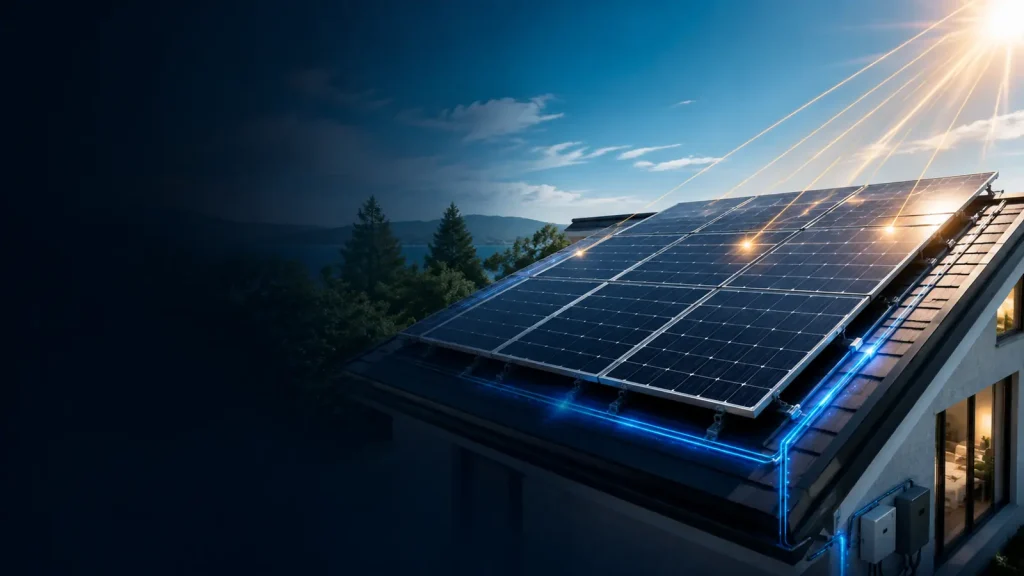

How do heat pumps work? Instead of creating heat directly, they transfer it between indoor and outdoor spaces using a refrigeration cycle. A heat pump can warm a home without creating heat through combustion. It uses electricity to move heat from one place to another. In winter, it gathers energy from outdoor air, ground or water and releases it indoors. In summer, many systems reverse direction and work like an air conditioner.
The name can be misleading in hot countries because a familiar split air conditioner is already a type of heat pump—it moves indoor heat outside. A reversible model adds valves and controls that let the same refrigeration cycle provide heating.
Quick answer: A heat pump circulates refrigerant through an evaporator, compressor, condenser and expansion device. The refrigerant absorbs heat at low temperature, the compressor raises its pressure and temperature, and it releases heat elsewhere. Because it transfers heat rather than converting all its electricity directly into heat, a well-installed system can deliver several units of heat for each unit of electricity used.
How Do Heat Pumps Work?
| System | Heat source or sink | Typical arrangement |
|---|---|---|
| Air-source | Outdoor air | Outdoor unit plus indoor air handler or hydronic system |
| Ground-source | Ground loop or groundwater | Buried loop connected to indoor equipment |
| Water-source | Water loop, lake or other approved source | Building or district loop with local units |
| Heat-pump water heater | Surrounding air | Heat pump mounted on or near a hot-water tank |
The refrigeration cycle
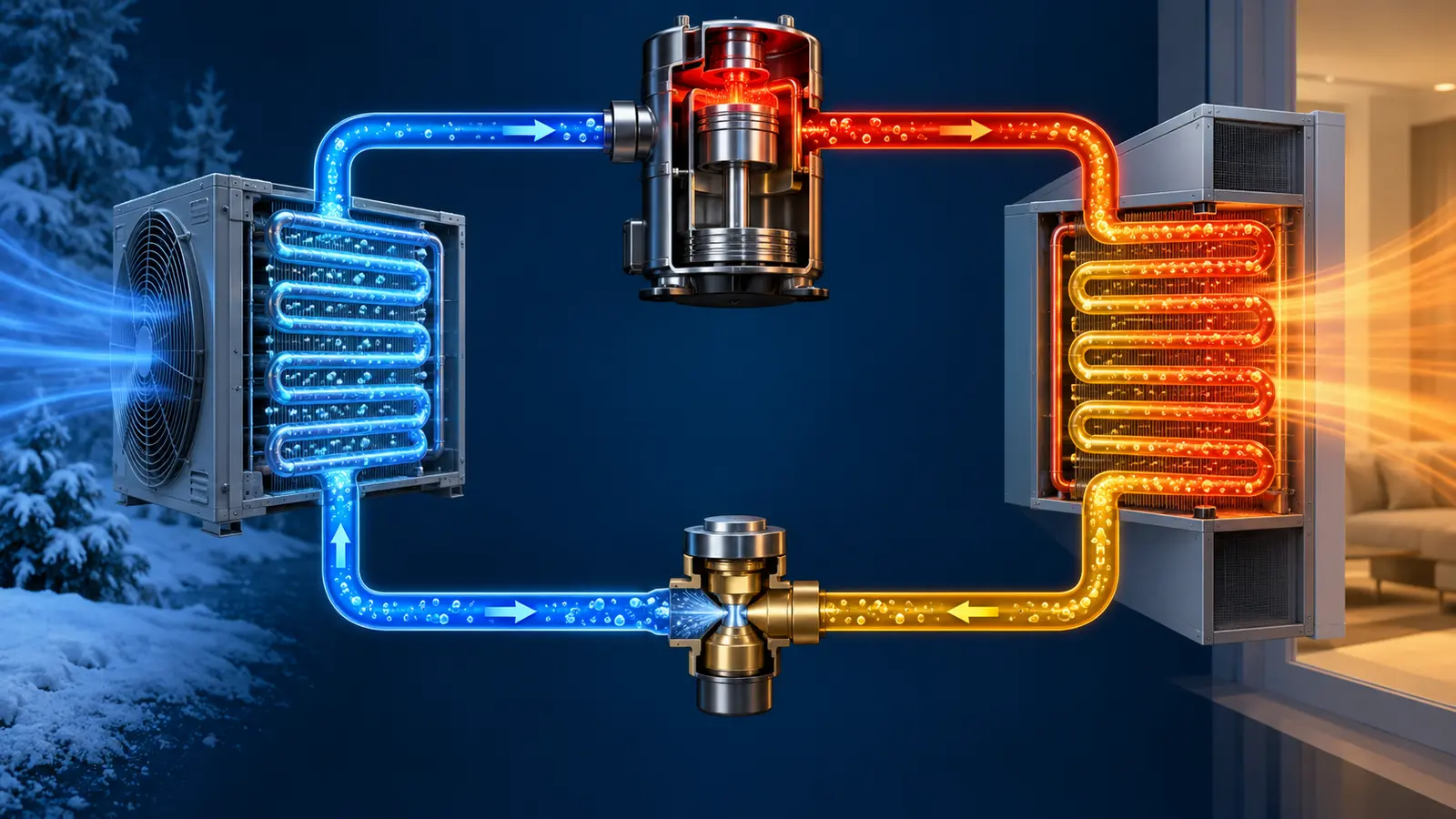
The cycle begins at the evaporator. Cold, low-pressure refrigerant absorbs heat and boils. A compressor then squeezes the vapor, raising its pressure and temperature. At the condenser, the hot refrigerant releases heat and becomes liquid. An expansion device reduces its pressure and temperature so it can absorb heat again.
Understanding the refrigeration cycle raises a useful question: how do heat pumps work in both heating and cooling modes?
“Evaporator” and “condenser” describe what the refrigerant is doing, not a permanently fixed indoor or outdoor box. In a reversible system, a valve changes the flow direction, so the coils exchange roles between heating and cooling.
The U.S. Department of Energy explains this process in its heat-pump systems guide. The equipment still consumes electricity for the compressor, fans, pumps and controls; it does not create free energy.
How can it collect heat from cold air?
Cold air still contains thermal energy above absolute zero. The outdoor coil can be made colder than the air, allowing heat to flow into the refrigerant. The compressor then raises the refrigerant temperature enough to release that heat indoors.
As outdoor temperature falls, an air-source heat pump may have to work harder. Capacity and efficiency depend on the model, refrigerant, coil design and controls. Modern cold-climate systems can operate well below freezing, but the correct design temperature and performance tables must be used for the location.
Efficiency: COP, EER, SEER and SCOP
Coefficient of performance, or COP, is useful for understanding heating. A COP of 3 means the system delivers three units of heat for each unit of electrical energy consumed at that test condition. The extra energy was moved from the environment.
COP changes with outdoor temperature, required indoor temperature and system operation. Seasonal ratings such as SEER, HSPF or SCOP combine standardized conditions to support comparison within a market. Ratings from different test standards should not be compared as if they were identical.
The International Energy Agency notes in The Future of Heat Pumps that the technology can reduce energy use and emissions from building heat, while the result depends on electricity supply, building performance and equipment replacement.
Heating and cooling with the same system
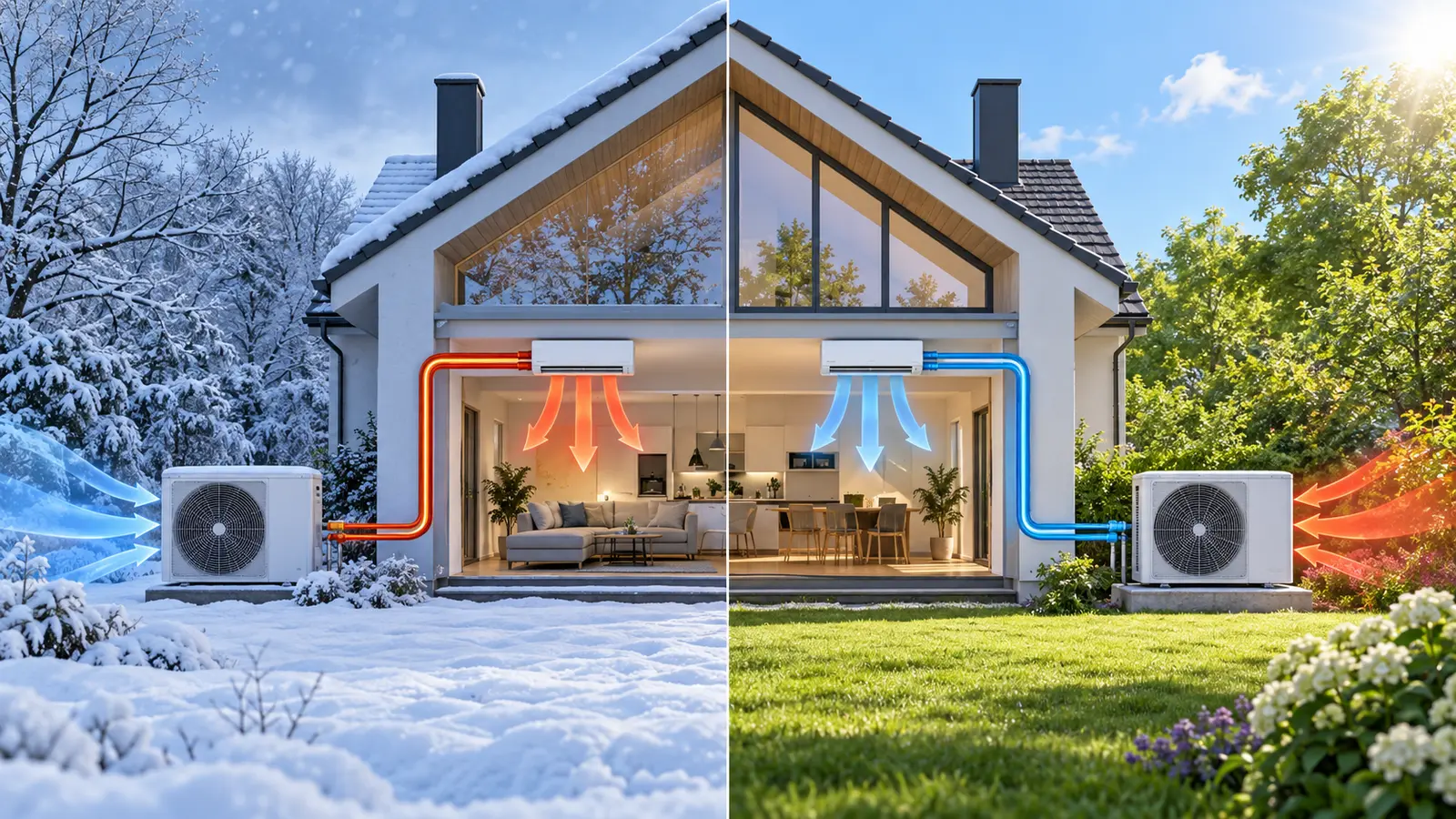
In cooling mode, the indoor coil absorbs heat and moisture, and the outdoor coil rejects heat. In heating mode, the cycle reverses. The thermostat asks for the desired indoor condition while inverter-driven systems can vary compressor speed rather than switching fully on and off.
Variable operation can improve comfort and efficiency by matching load, but a system still needs correct sizing and airflow. An oversized unit may cycle, control humidity poorly or operate outside its most efficient range. An undersized unit may rely heavily on backup heat or fail to maintain comfort at design conditions.
What happens during defrost?
When an outdoor coil operates below freezing, moisture can form frost that blocks airflow. The heat pump periodically enters a defrost cycle, often reversing briefly to warm the coil. Indoor heat may pause, and auxiliary heat may operate.
A small amount of steam or water near the outdoor unit during defrost can be normal. Persistent heavy ice, unusual noise or a unit that never clears should be checked by a qualified technician. Drainage must be designed so meltwater does not refreeze dangerously.
Ducted, ductless and hydronic options
- Ducted systems use an air handler and distribution ducts. Existing ducts must be evaluated for leakage, size and insulation.
- Ductless mini-splits connect one or more indoor heads to an outdoor unit. They suit homes without ducts and allow zones.
- Air-to-water systems heat water for radiators, fan coils or underfloor circuits. Performance depends strongly on required water temperature.
- Ground-source systems use stable ground temperatures but require drilling or trenching and higher installation cost.
Can a heat pump work with radiators?
Sometimes. Traditional boilers may send very hot water to small radiators, while a heat pump is usually more efficient at lower water temperatures. Larger emitters, better insulation, weather compensation or system balancing may be needed. High-temperature models exist, but a higher supply temperature often reduces efficiency.
The correct answer requires a room-by-room heat-loss calculation and emitter assessment. Replacing only the boiler without examining the distribution system can create disappointing comfort and bills.
Electric resistance backup
Some systems include electric resistance heaters for extreme weather, defrost or emergency use. Resistance heat converts roughly one unit of electricity into one unit of heat at the point of use, while a heat pump can move more than one unit under suitable conditions.
Frequent auxiliary operation may indicate very cold weather, a design choice, a control setting or a fault. It is not automatically wrong. The installer should explain the balance point and expected backup use. During winter, people often ask: how do heat pumps work when outdoor temperatures fall below freezing? The important point is that outdoor air still contains usable heat.
What determines running cost?
| Factor | Why it matters |
|---|---|
| Electricity tariff | Sets the cost of compressor, fans and backup heat |
| Seasonal efficiency | Determines heat delivered per unit of electricity across the year |
| Building heat loss | Insulation, air leakage and windows set demand |
| Climate | Outdoor conditions affect load and efficiency |
| Controls and temperature | Setpoints and scheduling change demand |
| Alternative fuel price | Comparison depends on the system being replaced |
No universal savings percentage is honest. Compare expected annual delivered heat, seasonal performance, tariffs and maintenance for the exact property. Include fixed fuel charges that may remain or disappear.
Carbon impact
Operational emissions depend on electricity generation and the efficiency of both the heat pump and the system it replaces. As grids add low-carbon generation, electric heating can become cleaner over its lifetime. Refrigerant manufacture and leakage also matter because some refrigerants have high global-warming potential.
Technicians must recover refrigerant properly. Equipment choice should consider safety classification, climate impact, service availability and regulation, not only a marketing label.
Planning a good installation
- Reduce avoidable heat loss and air leakage where practical.
- Obtain a room-by-room load calculation based on local design weather.
- Check electrical service, ducts, radiators and hot-water needs.
- Compare performance at realistic temperatures, not one mild test point.
- Plan outdoor-unit placement for airflow, drainage, service and noise.
- Ask how backup heat, defrost and zoning are controlled.
- Require commissioning records and user training.
ENERGY STAR’s heat-pump resources and NREL’s building electrification research are useful starting points, but local standards and qualified designers decide the installation.
Maintenance
- Clean or replace filters on schedule.
- Keep indoor and outdoor airflow unobstructed.
- Clear leaves, dust and snow according to the manual.
- Check condensate drains and unusual moisture.
- Have refrigerant, electrical, airflow and controls inspected when performance changes.
Cleaning a filter is ordinary maintenance. Opening a refrigerant circuit or high-voltage enclosure requires trained service.
Frequently asked questions
Is an air conditioner a heat pump?
It uses the same refrigeration principle to move indoor heat outside. A reversible heat pump can also run the cycle for heating.
Do heat pumps work below freezing?
Many modern models do, but capacity and efficiency vary. Design must use the model’s low-temperature performance data.
Are they noisy?
Modern equipment can be quiet, but sound depends on model, speed, mounting, reflection and distance. Placement and local noise rules matter.
Should I turn the thermostat down every night?
Large recoveries can trigger less-efficient operation or backup heat. The best schedule depends on the system, tariff and building.
Can a heat pump supply hot water?
Yes, through a heat-pump water heater or air-to-water system designed for the required temperature and demand.
Final summary
So, how do heat pumps work? They transfer heat using a refrigeration cycle rather than producing heat directly through combustion. A heat pump uses a refrigeration cycle to absorb heat at a low temperature and release it at a higher one. Reversing the cycle provides both heating and cooling. Its efficiency comes from moving environmental heat, not from creating energy.
Good performance depends less on a fashionable model than on careful design: accurate loads, suitable emitters, correct size, airflow, controls and commissioning. In hot weather, pair equipment decisions with an understanding of heat index and human heat risk. Treat the building and the heat pump as one system, then compare cost and carbon using local conditions.
Transparency
Sources & references
Editorially reviewed
Editorial information
SOAKJAM articles are designed for clarity, useful context and transparent sourcing. Important facts should be checked against the linked primary sources.
Found an error, outdated detail or a useful source we should consider?