

Why do we sleep when being unconscious for hours seems so inconvenient? It takes time away from finding food, caring for family and watching for danger, yet humans and many other animals repeatedly return to sleep. That persistence is the first clue that sleep is not wasted time. It is a highly organized biological state that supports the brain and body in ways ordinary quiet rest cannot fully replace.
Scientists have identified several important jobs performed during sleep, including memory processing, immune coordination, metabolic regulation and tissue maintenance. They have not found one single purpose that explains every feature of sleep. The best answer is therefore a collection of connected functions rather than one hidden switch.
Quick answer: We sleep because the brain and body need recurring periods with a different pattern of activity. During sleep, neural networks process information, hormones and immune signals follow coordinated rhythms, and cardiovascular and metabolic systems shift into their nighttime state. Sleep is also regulated by a growing pressure to rest and an internal clock that aligns us with day and night. That is the short answer to why do we sleep.
Why do we sleep in simple terms?
Sleep is an active maintenance period. Awareness of the outside world decreases, movement is reduced, and the brain moves through recognizable electrical patterns. Meanwhile, breathing, circulation, temperature, hormones and immune activity continue under changing control. A sleeping person may look still, but the body is not switched off.
It helps to separate four questions that are often blended together:
| Question | What scientists examine | Short answer |
|---|---|---|
| What starts sleep? | Sleep pressure and brain circuits | The need to sleep rises with time awake |
| When do we sleep? | Circadian clocks and environmental cues | Light helps align sleep with the 24-hour day |
| What happens during sleep? | Non-REM and REM stages | The brain and body cycle through distinct states |
| What is sleep for? | Learning, physiology, health and evolution | Sleep supports several essential functions |
No single experiment can answer all four questions. Researchers combine brain recordings, hormone measurements, behaviour, genetics, clinical observations and studies of many species. The result is a detailed picture with important open questions—not a sign that science knows nothing about sleep.
Sleep is a different biological state, not simply inactivity
Quiet wakefulness can reduce physical effort, but the brain patterns of sleep are different. In a sleep study, sensors record signals such as brain waves, eye movements, heart rhythm, breathing and muscle activity. Those measurements show repeated transitions between non-rapid eye movement sleep, called non-REM or NREM, and rapid eye movement sleep, called REM.
People can usually be awakened from sleep, which separates it from coma or anaesthesia. Sleep is also internally organized: stages arrive in cycles, their proportions change through the night, and their timing changes across the lifespan. Newborns, teenagers, working adults and older people do not have identical sleep architecture.
The National Institute of Neurological Disorders and Stroke describes sleep in its Brain Basics guide as essential to many brain and body functions. This active organization is an important part of why do we sleep rather than merely lie still.
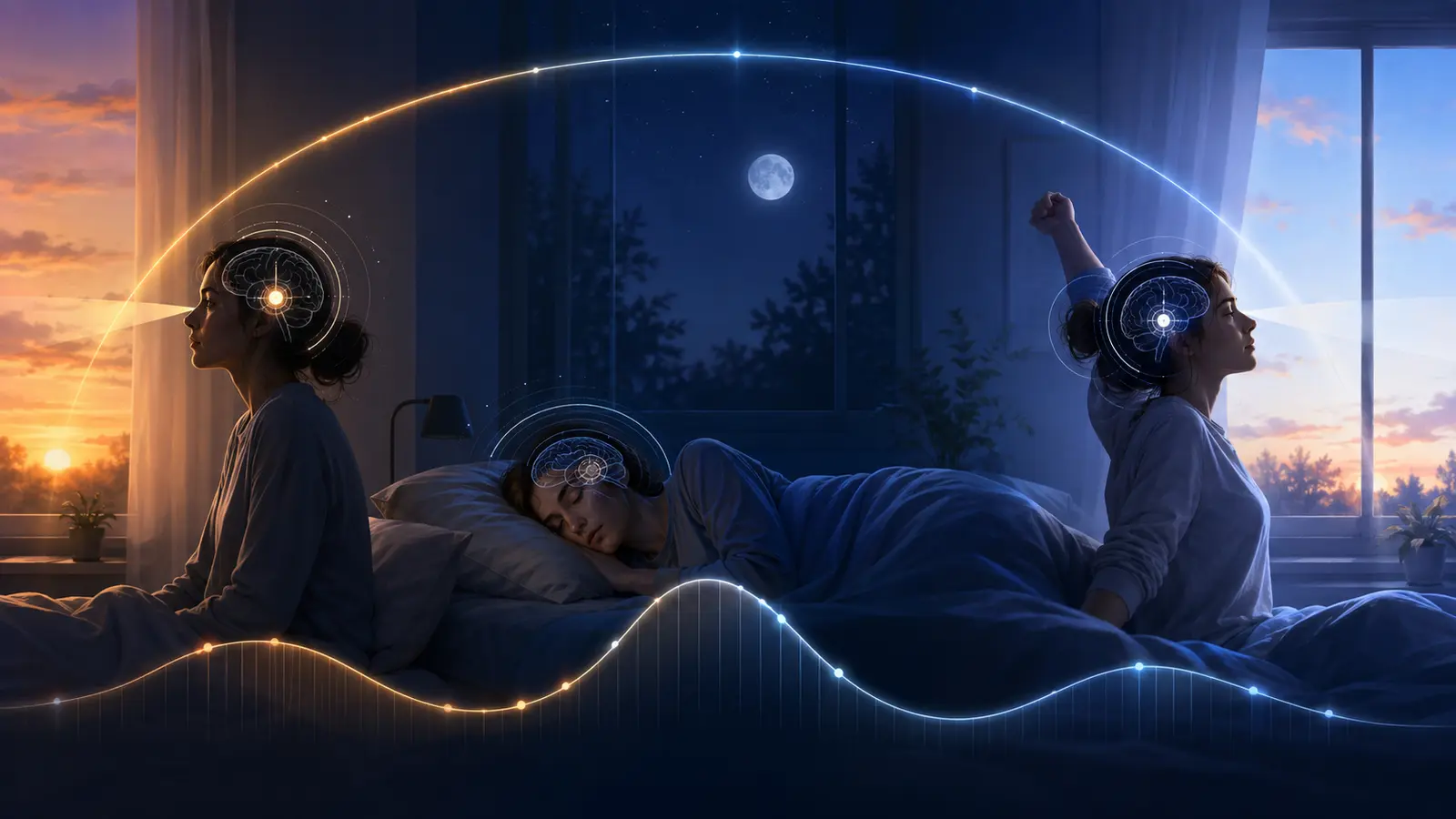
Two systems help decide when you feel sleepy
Your urge to sleep is shaped by at least two interacting systems. The first is homeostatic sleep pressure. The longer you stay awake, the stronger the biological need for sleep generally becomes. During sleep, that pressure declines. This helps explain why an unusually long waking day can produce heavy sleepiness even before your usual bedtime.
Adenosine is one chemical linked to this process. Its level in the brain rises during wakefulness and contributes to the signal for sleep. Caffeine temporarily promotes alertness largely by blocking adenosine receptors; it does not erase the underlying need for sleep. The effect can outlast the cup of coffee, which is why caffeine late in the day may interfere with bedtime.
The second system is circadian timing. Internal clocks coordinate daily rhythms in sleepiness, alertness, temperature, hormones, appetite and other functions. A master clock in the brain, the suprachiasmatic nucleus, uses light detected by the eyes as a powerful timing cue. The National Institute of General Medical Sciences explains how the master circadian clock coordinates clocks across organs and tissues.
In the evening, darkness normally supports rising melatonin, a hormone that signals biological night and promotes sleepiness. Morning light helps shift the system toward wakefulness. Homeostatic pressure and circadian timing can pull in different directions: you may be tired after staying awake but still get a temporary evening boost in alertness, or feel sleepy during jet lag even after enough hours in bed.
Travel across time zones suddenly separates the internal clock from the new light–dark schedule. SOAKJAM’s guide to why time zones exist explains the civil-time changes that make jet lag visible on a clock, while the body must adjust biologically over time.
What happens during the stages of sleep?
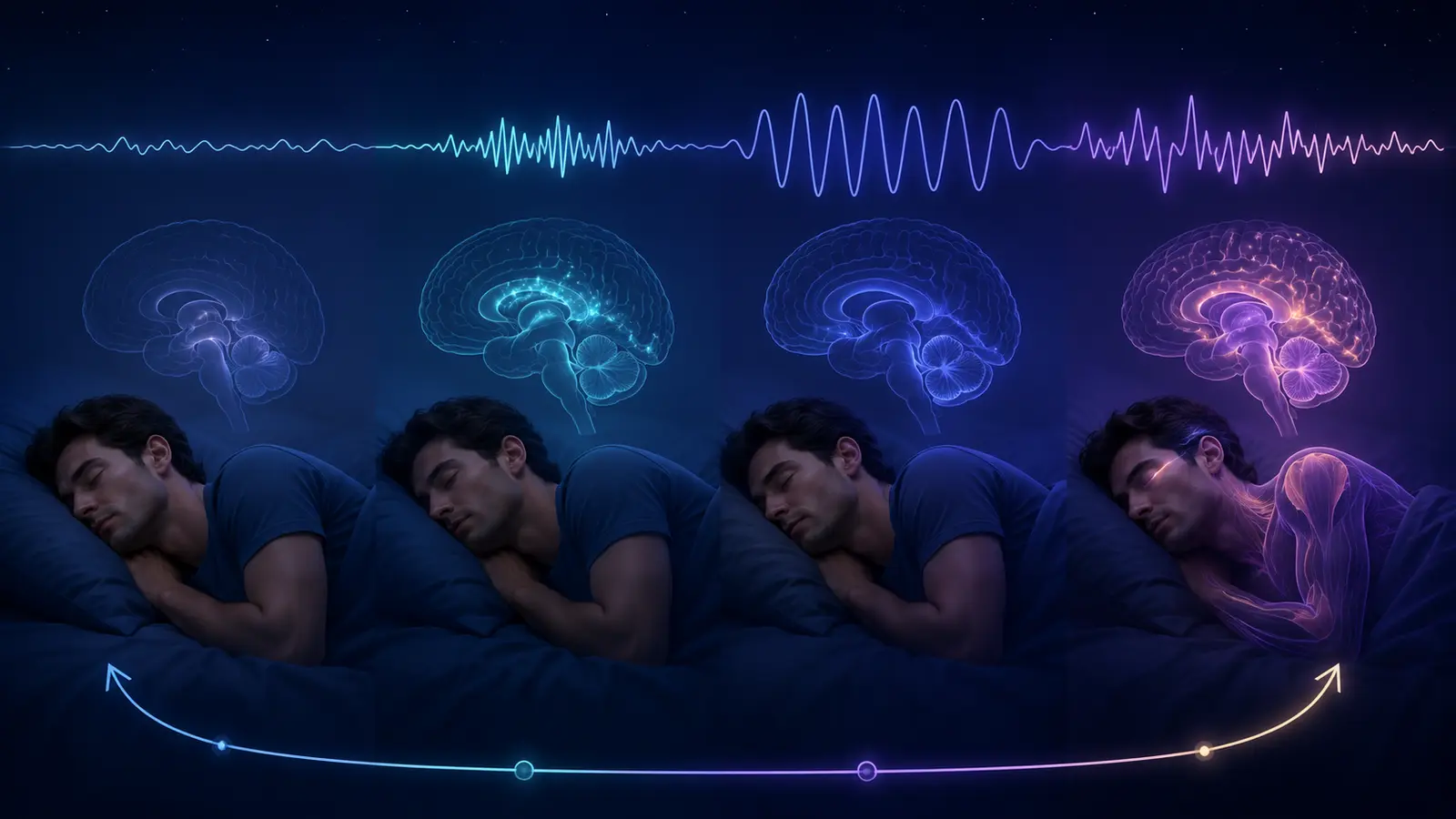
Sleep begins with non-REM stages and later reaches REM. According to the National Heart, Lung, and Blood Institute’s overview of sleep phases and stages, a cycle usually restarts every 80 to 100 minutes, and many people complete four to six cycles in a night. Brief awakenings between cycles can happen without being remembered.
| Stage | Typical features | Pattern across the night |
|---|---|---|
| N1 | Transition from wakefulness; light sleep | Usually brief at sleep onset |
| N2 | Clear sleep with distinctive brain-wave events | Forms a large share of adult sleep |
| N3 | Deep or slow-wave sleep; harder to awaken | More concentrated early in the night |
| REM | Active brain, rapid eye movements and reduced muscle tone | Periods generally lengthen later in the night |
Deep N3 sleep is associated with strong slow brain waves and several restorative processes. During REM sleep, brain activity resembles waking in some respects, vivid dreaming is common, and most skeletal muscles are temporarily inhibited. This normal muscle reduction helps prevent routine acting-out of dreams.
The stages are not a ladder in which REM is simply “best.” A healthy night contains repeated movement among them. Cutting the night short can remove a disproportionate amount of later REM sleep, while fragmented sleep can repeatedly interrupt the normal sequence even if total time in bed looks adequate. The cycling itself helps explain why do we sleep for sustained periods rather than only taking scattered moments of rest.
Sleep helps the brain learn and organize memory
Learning does not finish when a lesson or experience ends. Newly formed memories are initially vulnerable, and later brain activity can stabilize, reorganize and connect them with existing knowledge. Sleep supports this consolidation. The NHLBI overview of why sleep is important links adequate sleep with learning and long-term memory formation.
Different kinds of memory appear to benefit from different features of non-REM and REM sleep. Researchers study the reactivation of neural patterns, slow waves, sleep spindles and communication between the hippocampus and cortex. The details are complex; it is misleading to assign every fact to one stage or claim that REM alone “saves” memory.
Sleep also supports attention and flexible thinking the following day. When sleep is restricted, people commonly react more slowly, lose focus more easily and make poorer judgments. A dangerous feature is that an impaired person may not accurately recognize the size of the impairment. This cognitive work is a major part of why do we sleep.
Sleep supports emotion without erasing difficult feelings
Brain networks involved in emotion continue to operate during sleep. Adequate sleep helps people regulate responses, interpret social information and cope with ordinary stress. After insufficient sleep, irritability can rise and emotional reactions can become harder to manage.
This does not mean sleep is a cure for anxiety, depression or trauma. The relationship runs in both directions: mental-health conditions can disturb sleep, and ongoing poor sleep can worsen daytime symptoms. Persistent changes deserve proper assessment rather than the advice to “just sleep more.”
Why do we sleep for physical health?
Every organ follows daily rhythms, and sleep gives the body a predictable interval in which those rhythms shift. During non-REM sleep, heart rate and blood pressure generally fall. Hormones involved in growth, appetite and glucose control follow time-dependent patterns. Deep sleep supports the release of growth hormone, which contributes to normal growth in children and tissue repair throughout life.
Sleep and the immune system also influence each other. Immune cells and signaling molecules change activity across the day and night. The NHLBI notes that insufficient sleep can alter the body’s defence against infection, while illness itself often changes sleepiness and sleep quality.
Metabolism is affected too. Repeated sleep deficiency can alter how the body responds to insulin and can influence appetite, food choices and energy balance. Population studies connect chronically inadequate or poor-quality sleep with higher rates of several health conditions, but an association is not proof that sleep alone caused an individual illness. Diet, activity, stress, work schedules, medical conditions and social circumstances interact.
That broader context matters. Sleep is one part of health, not a guarantee against disease and not a moral test. Still, the coordinated changes in circulation, hormones, metabolism and immunity help answer why do we sleep every day rather than treating rest as optional.
Does sleep clear waste from the brain?
Researchers are investigating fluid pathways that move substances through and out of brain tissue, often discussed as the glymphatic system. Animal experiments have found that some forms of clearance increase during sleep or sleep-like states. In 2024, an NIH-supported study provided direct evidence of channels that may help drain waste from the human brain, described in an NIH Research Matters report.
This is promising research, but popular claims often run ahead of the evidence. Human brain clearance is difficult to measure, the mechanisms remain under study, and sleep should not be described as a simple nightly “detox.” It is reasonable to say that fluid movement and metabolic housekeeping may be part of sleep biology without claiming that one mechanism explains the entire purpose of sleep.
Why do dreams happen?
Dreaming can occur in both REM and non-REM sleep, although vivid narrative dreams are often reported from REM. Dreams may reflect memory activation, emotion, imagination and the brain’s attempt to build experience from internally generated signals. No single theory explains every dream.
Dreams are therefore evidence that the sleeping brain remains active, but dreaming is not a complete answer to sleep’s purpose. People who recall few dreams still sleep, and many physiological benefits of sleep do not depend on remembering dream content.
How much sleep do people need?
Sleep needs change with age and vary somewhat between individuals. The CDC’s current sleep-duration guidance summarizes recommendations from expert organizations:
| Age | Recommended sleep per 24 hours |
|---|---|
| 0–3 months | 14–17 hours |
| 4–12 months | 12–16 hours, including naps |
| 1–2 years | 11–14 hours, including naps |
| 3–5 years | 10–13 hours, including naps |
| 6–12 years | 9–12 hours |
| 13–17 years | 8–10 hours |
| 18–60 years | At least 7 hours |
| 61–64 years | 7–9 hours |
| 65 years and older | 7–8 hours |
These are population recommendations, not a stopwatch test. Pregnancy, illness, recovery from sleep loss and individual biology can affect need. Regularly sleeping far outside the expected range, especially with daytime impairment, is worth discussing with a healthcare professional.
Duration, quality, timing and regularity all matter
Hours are important, but they are not the whole story. Quality sleep is sufficiently continuous and refreshing. Timing means sleep occurs at a biologically appropriate part of the person’s schedule. Regularity describes how stable that timing is from day to day.
A person may spend eight hours in bed yet wake repeatedly because of noise, pain, breathing problems or a sleep disorder. A night worker may obtain enough hours while still struggling against daytime light and social demands. Another person may alternate short work nights with very long weekend sleep. Each pattern can feel different because sleep duration, continuity and circadian alignment are separate dimensions.
What happens when sleep is repeatedly cut short?
One short night commonly causes sleepiness, slower reactions, reduced attention and mood changes. Repeated deficiency can interfere with school, work, driving and relationships. The NHLBI’s review of sleep deficiency and health also describes effects on glucose regulation, immune response, cardiovascular health and growth.
Sleeping longer after a shortage can reduce some sleepiness, but recovery is not always immediate or complete. It is better to protect regular sleep than to rely on repeatedly “catching up.” Anyone who feels dangerously drowsy should avoid driving or operating machinery; alertness tricks are not substitutes for sleep.
Habits that support healthy sleep
Healthy habits cannot cure every sleep disorder, but they can make normal sleep easier to obtain. NHLBI’s healthy sleep guidance supports several practical steps:
- Allow enough time for sleep and keep wake time reasonably consistent.
- Use the period before bed for quieter, lower-light activity.
- Keep the bedroom dark, quiet, comfortable and cool.
- Get daylight and physical activity during the day when possible.
- Avoid caffeine late enough that its long effect does not reach bedtime.
- Avoid using alcohol as a sleep aid; it can make sleep lighter and more fragmented.
- If naps make nighttime sleep difficult, keep them earlier and brief.
A rigid “perfect” routine can itself become stressful. Aim for repeatable conditions that fit work, caregiving, health and culture. Shift workers and new parents may need adapted strategies rather than advice designed only for a daytime schedule.
When sleep problems deserve medical attention
Talk with a qualified healthcare professional if trouble falling asleep, staying asleep or remaining awake during the day is frequent, persistent or disruptive. Loud habitual snoring, gasping, witnessed pauses in breathing, morning headaches and severe daytime sleepiness can be warning signs of sleep apnea. The NHLBI lists these and related sleep-apnea symptoms.
Other conditions include insomnia, restless legs syndrome, narcolepsy, circadian-rhythm disorders and parasomnias. Keeping a simple diary of bedtimes, awakenings, naps, caffeine, medicines and daytime symptoms can help a clinician see patterns. This article offers general education and cannot diagnose the cause of an individual sleep problem.
Frequently asked questions
Why do we sleep if the brain stays active?
Activity is not the same as wakefulness. During sleep, the brain changes its communication patterns and responsiveness while coordinating memory, body rhythms and stage-specific processes that do not occur in the same way during waking.
Is deep sleep more important than REM sleep?
Both are normal parts of a healthy night and appear to support different, overlapping functions. Trying to maximize one stage from a consumer tracker can be misleading because wearable estimates are not the same as a clinical sleep study.
Can resting with closed eyes replace sleep?
Quiet rest may reduce stress and physical effort, but it does not reproduce the organized non-REM and REM cycles of sleep. Rest can be useful without being an equal substitute for sleep.
Why does caffeine stop working when I am extremely tired?
Caffeine temporarily blocks part of the adenosine signal, but sleep pressure can continue to build. It may improve alertness for a time without restoring the functions lost through insufficient sleep.
Is waking briefly during the night always abnormal?
No. Brief awakenings can occur between sleep cycles and may not be remembered. Frequent or prolonged awakenings that leave you unrefreshed are more important, especially when they persist.
Do all animals sleep?
Sleep-like states have been documented across a wide range of animals, but their form and duration vary greatly. Some species can reduce movement and responsiveness in unusual ways suited to migration, predation, breathing or life in water. The diversity suggests that sleep is ancient and adaptable.
The short version
So, why do we sleep? Sleep is a recurring biological state that lets the brain and body operate in patterns different from wakefulness. Homeostatic pressure builds the need for sleep, the circadian clock helps place sleep within the day, and non-REM and REM cycles support several kinds of maintenance.
Sleep contributes to memory, attention, emotional regulation, immunity, metabolism, circulation, growth and repair. Science is still refining how these functions fit together, but the central conclusion is clear: sleep is not empty time. It is an essential part of healthy human biology.
Transparency
Sources & references
- National Institute of Neurological Disorders and Stroke — Brain Basics: Understanding Sleep
- National Institute of General Medical Sciences — Circadian Rhythms
- National Heart, Lung, and Blood Institute — Your Sleep/Wake Cycle
- National Heart, Lung, and Blood Institute — Sleep Phases and Stages
- National Heart, Lung, and Blood Institute — Why Is Sleep Important?
- Centers for Disease Control and Prevention — About Sleep
- National Heart, Lung, and Blood Institute — How Sleep Affects Your Health
- National Heart, Lung, and Blood Institute — Healthy Sleep Habits
- National Heart, Lung, and Blood Institute — Sleep Apnea Symptoms
- National Institutes of Health — Brain Waste-Clearance System Shown in People for First Time
- Journal of Clinical Sleep Medicine — Recommended Amount of Sleep for a Healthy Adult
- Journal of Clinical Sleep Medicine — Recommended Amount of Sleep for Pediatric Populations
Editorially reviewed
Editorial information
SOAKJAM articles are designed for clarity, useful context and transparent sourcing. Important facts should be checked against the linked primary sources.
Found an error, outdated detail or a useful source we should consider?