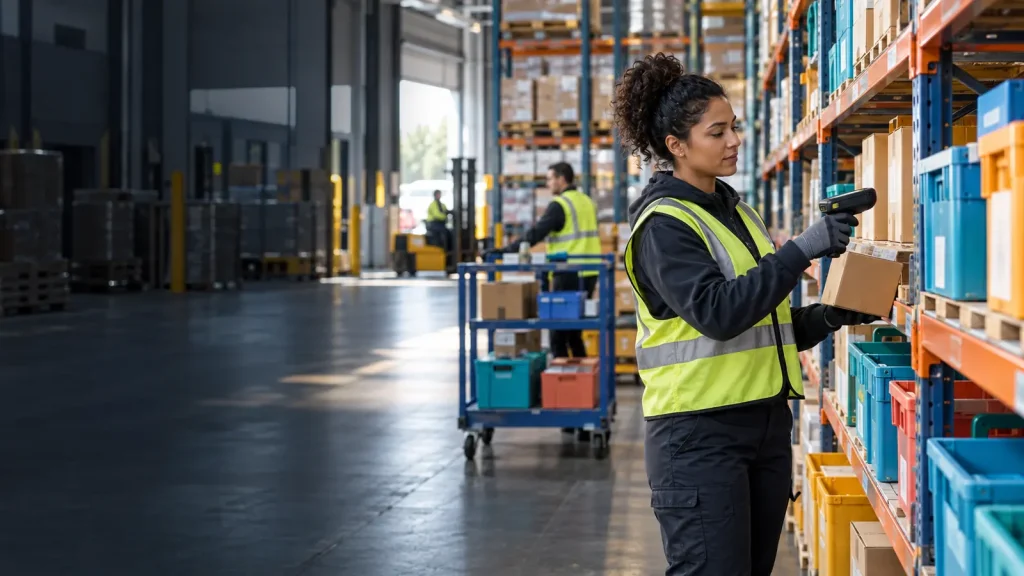

A shop shelf, restaurant kitchen or parcel on a doorstep looks like the end of a simple transaction. Behind it sits a network of farms, mines, component makers, factories, warehouses, ports, software systems, finance providers and people. That network may cross a city or several continents before a customer receives the final product.
So, how does a supply chain work when so many organizations are involved? It coordinates materials, information and money so that the right item can move from an initial idea to a customer—and, increasingly, back again for repair, reuse or recycling. Each participant performs a different task, but every task depends on what happens before and after it.
Quick answer: how does a supply chain work? A business estimates demand, designs a product, buys inputs, converts them into finished goods, stores inventory, transports orders and delivers them to customers. Information travels in both directions, while payments generally move back toward suppliers. Returns, repairs and recycling create a reverse flow.
What is a supply chain?
A supply chain is the connected system that makes and delivers a product or service. It includes the focal company, its direct suppliers, the suppliers behind those suppliers, logistics providers, distributors, retailers and customers. A local bakery has a supply chain for flour, yeast, packaging, equipment and energy. A smartphone chain is much larger, linking mineral extraction, chip fabrication, software, assembly, air or ocean freight, retail and after-sales service.
The word “chain” is useful, but the real structure is usually a network. One factory may buy from hundreds of suppliers, and one supplier may serve many brands. The World Bank’s work on global value chains explains how production can be divided across firms and countries. This specialization can improve productivity, but it also creates dependencies that managers must understand.
To see how does a supply chain work in practice, follow the main stages below. Their order is logical, although companies often run several of them at once.
| Stage | Main question | Typical activities |
|---|---|---|
| Plan and design | What will customers need? | Forecast demand, design products, set targets and plan capacity |
| Source | Who can provide the inputs? | Select suppliers, agree prices, place orders and monitor standards |
| Make | How will inputs become products? | Schedule production, assemble or process goods, test quality |
| Store | Where should inventory wait? | Receive, count, protect, pick and pack stock |
| Move and deliver | How will orders reach customers? | Book transport, clear customs, distribute and complete the last mile |
| Return and recover | What happens after use? | Handle returns, repair, refurbish, reuse materials or recycle |
Supply chain, logistics and value chain: what is the difference?
These terms overlap, but they are not identical. Logistics focuses mainly on storing and moving goods: transport, warehousing, order fulfilment and delivery. Logistics is therefore an important part of supply chain management.
A value chain is broader. It considers every activity that creates value, including research, design, marketing, sales and customer support. The United Nations Industrial Development Organization describes global value chains as production divided into activities and tasks carried out across countries. A supply chain concentrates on the network and flows needed to fulfil demand; a value-chain analysis asks where value is created, captured or lost.
1. Planning starts with demand
Before ordering materials, a company estimates what customers will buy, where and when. Planners use historical sales, confirmed orders, promotions, seasons, market signals and judgment. They translate the forecast into requirements for labour, machinery, ingredients, components, warehouse space and transport.
This is the first operational answer to how does a supply chain work: demand is converted into a coordinated plan. Forecasts are never perfect. If a business plans too little, it may lose sales; if it plans too much, cash becomes trapped in unsold inventory. Good planning therefore uses ranges and scenarios, not a single supposedly certain number. Teams also agree which customers or products receive priority when capacity is limited.
2. Sourcing builds the supplier network
Procurement teams identify possible suppliers and compare cost, quality, capacity, delivery performance, location and risk. After qualification, the buyer and supplier agree specifications, volumes, lead times, payment terms and remedies for problems. A purchase order then authorizes a defined quantity for a defined date.
Direct suppliers are often called tier-one suppliers. Their suppliers are tier two, followed by tier three and beyond. A clothing brand might buy finished garments from tier one, while fabric mills, dye producers and cotton farms sit deeper in the network. A company that watches only tier one may miss a critical material produced by a single factory several levels away.
Understanding those tiers is central to how does a supply chain work at scale. Supplier mapping reveals dependencies, while contracts and audits set expectations. The OECD’s risk-based due-diligence guidance encourages companies to identify and address harmful impacts not only in their own operations but also in supply chains and business relationships.
3. Production turns inputs into finished goods
Manufacturing can mean assembling electronics, mixing medicine, roasting coffee or cutting timber. Production managers sequence jobs, assign people and equipment, issue materials and monitor output. Quality controls may inspect incoming inputs, test work during production and check finished goods before release.
For how does a supply chain work, production is the conversion point: plans and purchased inputs become something a customer can use. The process must balance efficiency with flexibility. Long runs can reduce unit cost, but smaller batches may respond faster to changing demand. Maintenance, worker skills, reliable energy and accurate instructions matter as much as machinery. A minor defect or missing component can stop the entire line.
4. Inventory and warehouses create time buffers
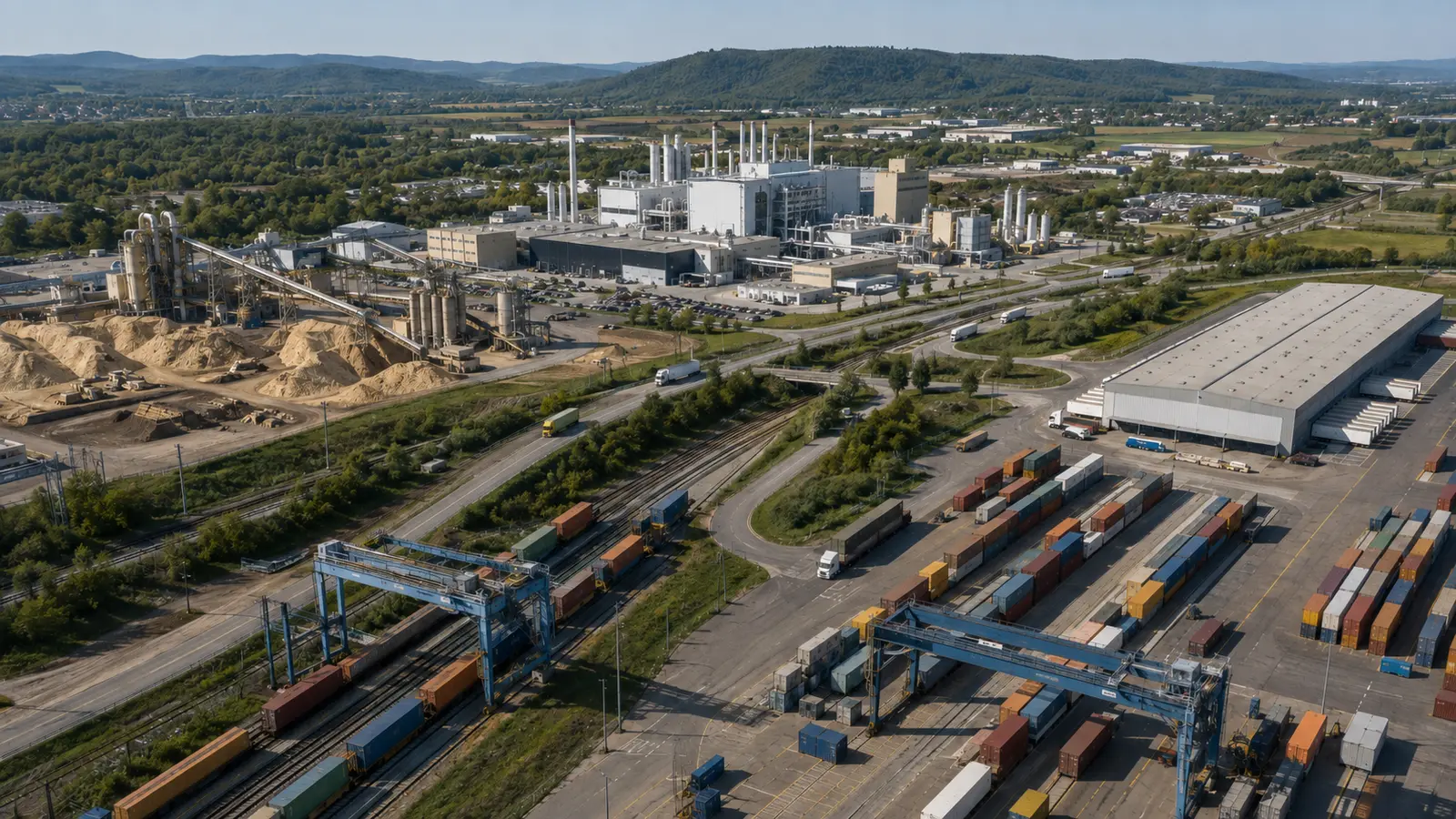
Materials rarely move directly from one process to the next without waiting. Inventory can include raw materials, unfinished work, spare parts and finished goods. Warehouses receive deliveries, verify quantities, store items in known locations, protect them from damage, and pick and pack customer orders.
Inventory is both useful and expensive. Safety stock protects against uncertain demand or late deliveries, while too much stock consumes space and cash and may expire or become obsolete. Managers set reorder points by considering expected demand during the replenishment lead time, plus a buffer for uncertainty. Some products require cold storage, secure handling or separation from hazardous materials, so warehouse design affects quality as well as speed.
Digital records connect physical stock with the plan. Barcodes, sensors and warehouse systems help teams know what arrived, where it is and whether it is available to promise to a customer. Bad data can create a “phantom” item that appears in a system but is missing from the shelf.
5. Transport connects each location
Road, rail, air, sea and inland waterways serve different needs. Air freight is fast but costly. Ships carry large volumes economically but require more time and port connections. Rail can be efficient on suitable corridors, while trucks provide flexible door-to-door movement. Many international shipments use several modes.
The UN Trade and Development Review of Maritime Transport 2025 shows why shipping conditions matter to global trade. At borders, documents, product rules, duties and inspections also affect timing. The World Trade Organization’s Trade Facilitation Agreement is designed to speed the movement, release and clearance of goods and improve customs cooperation.
The last mile—from a local facility to the recipient—is often the most visible part of how does a supply chain work. Delivery density, traffic, failed delivery attempts and customer time windows can make this short distance complex and expensive. The journey is complete only when the correct order arrives in usable condition and the customer can confirm receipt.
Three flows keep the system connected
Products are only one of three essential flows:
- Physical flow: materials and goods usually move downstream toward the customer; returns and recovered materials move upstream.
- Information flow: forecasts, orders, inventory records, shipment notices and quality data move in both directions.
- Financial flow: invoices and payments normally move upstream, while credit, insurance and currency arrangements support transactions.
A delayed message can be as disruptive as a delayed truck. If a retailer’s demand change never reaches a factory, each company may plan from different assumptions. Shared data, agreed definitions and timely exception alerts help the network act as a system rather than as isolated firms.
Why supply chains fail
Disruption is not always a dramatic global event. Common causes include inaccurate forecasts, poor-quality inputs, equipment breakdowns, labour shortages, cyber incidents, supplier insolvency, congestion, severe weather and missing paperwork. The effect depends on where the failure occurs. A cheap but unique component can halt a valuable product if no substitute has been approved.
Interdependence allows a local shock to travel. UNIDO’s analysis of global value-chain disruptions describes how problems involving strategic inputs can spread downstream across borders. The weakest point may not be the biggest supplier; it may be the least visible dependency, a single transport route or a software service shared by many partners.
Performance also varies by national infrastructure and border processes. The World Bank Logistics Performance Index emphasizes the speed, connectivity and reliability of logistics and its weakest-link nature. A shipment can lose the time saved at a modern port if a later handoff is unreliable.
How companies make supply chains more resilient
Resilience is the ability to prepare for disruption, respond and recover without abandoning long-term goals. It does not mean holding unlimited stock or moving every activity close to home. Those choices can be costly and may create new concentrations.
A stronger approach to how does a supply chain work under pressure combines several practices:
- Map critical tiers. Identify where important materials, facilities, routes and digital services originate.
- Measure time to recover. Estimate how long each critical node would need after a shutdown and how long the business could operate without it.
- Qualify alternatives. Approve backup suppliers, materials, tools or routes before a crisis, while recognizing that two vendors can still share the same hidden source.
- Use targeted buffers. Hold extra inventory or capacity where the consequences of failure justify the cost.
- Run scenarios. Test responses to demand surges, transport closures, quality failures and communication outages.
- Share signals. Give partners timely forecasts and constraints, and define who makes decisions during an exception.
- Protect digital links. Control access, verify software and service providers, back up essential data and rehearse recovery.
Digital risk deserves special attention because ordering, production and transport increasingly depend on connected systems. The US National Institute of Standards and Technology treats cybersecurity supply-chain risk management as the identification, assessment and mitigation of risks associated with products, services and suppliers. Visibility helps, but it must lead to decisions: an alert is useful only if someone owns the response.
People and responsible sourcing
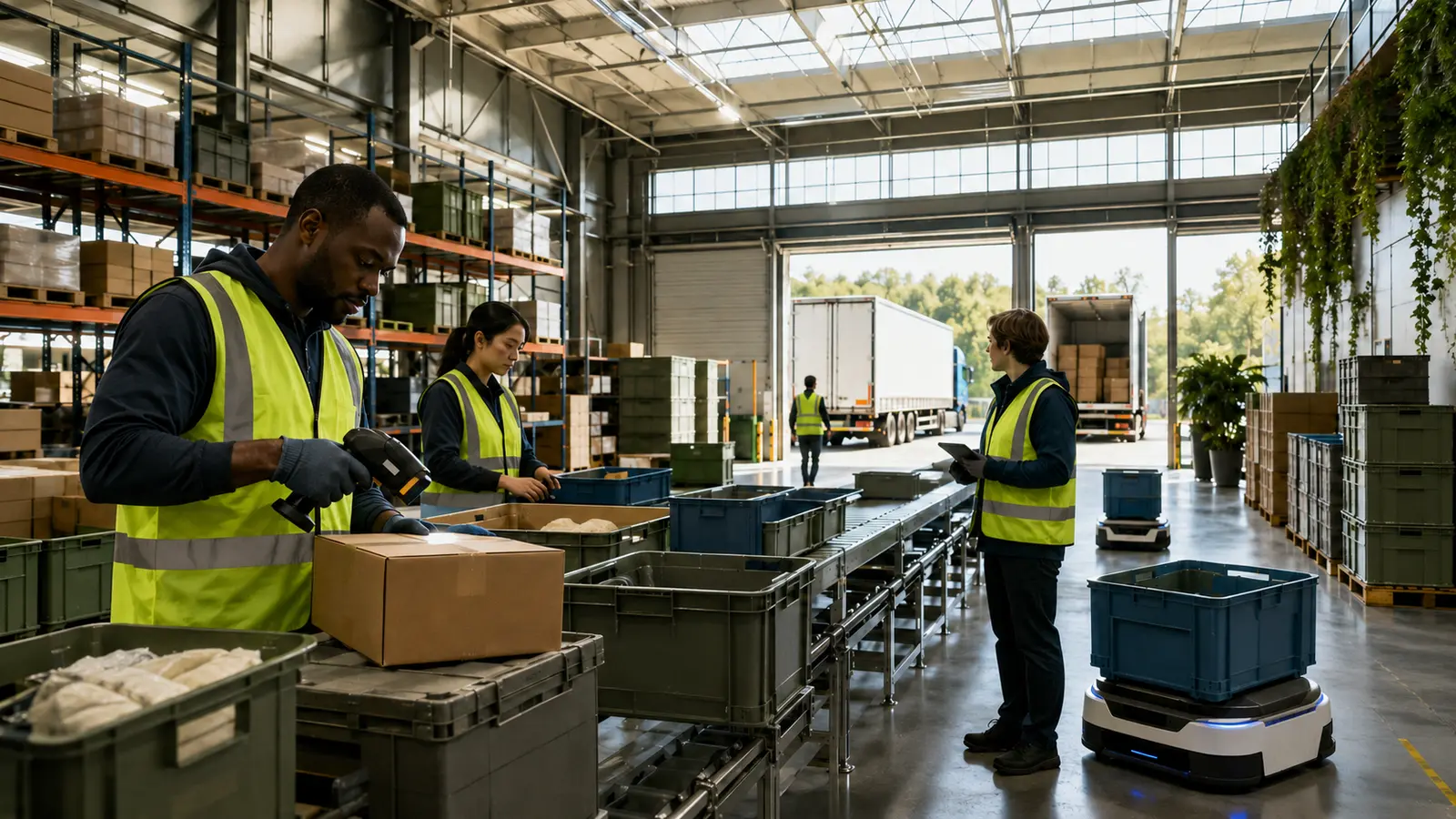
Every stage depends on people: farm workers, machine operators, drivers, seafarers, planners, technicians and shop staff. Low prices or fast delivery can hide pressure farther upstream. Unsafe conditions, excessive working hours, forced labour, discrimination and restrictions on worker voice are operational and human-rights concerns, not separate side issues.
The International Labour Organization’s strategy on decent work in supply chains addresses opportunities and deficits across sectors. Responsible companies set standards, investigate risks, listen to workers and support remediation when harm occurs. Simply dropping a supplier can push problems out of sight; improvement may require collaboration, purchasing changes and credible consequences for persistent abuse.
The OECD Guidelines for Multinational Enterprises on Responsible Business Conduct provide government-backed recommendations covering human rights, labour, environment and other impacts. Due diligence should be proportionate to risk and continuous, because suppliers, locations and conditions change.
Returns and circular supply chains
The traditional picture ends at delivery, but modern supply chains also manage what comes back. E-commerce returns, warranty repairs, reusable packaging, product take-back and recycling create reverse logistics. The business must decide whether an item can be restocked, repaired, refurbished, dismantled for parts, recycled or safely disposed of.
Circular design makes recovery easier from the beginning. Standard fasteners, replaceable components, durable materials and clear material information can preserve value after the first use. UN Environment Programme guidance on circularity highlights reuse, refurbishment and recycling as ways to conserve resources and reduce waste and emissions. Reverse flows need capacity, inspection rules and data just as outbound delivery does.
How supply-chain performance is measured
No single metric tells the whole story. A team may track on-time delivery, order accuracy, lead time, forecast error, stock availability, inventory turnover, defect rates, transport cost, emissions, worker-safety indicators and supplier corrective actions. Measures should connect to customer needs and business risks.
Trade-offs matter. Cutting inventory can improve cash flow but reduce protection from delays. Using the fastest transport may improve service but increase cost and emissions. A useful dashboard makes these tensions visible and separates normal variation from exceptions that require action.
A simple example: a jar of tomato sauce
Imagine a company preparing sauce for a supermarket promotion. The retailer sends a demand forecast. The producer plans a batch and orders tomatoes, oil, spices, glass jars, metal lids, labels and cartons. Farms and ingredient processors supply food inputs; packaging makers rely on their own raw materials. Each tier has a schedule and quality requirements.
The factory receives and tests the inputs, cooks the sauce, fills and seals the jars, applies labels and packs cartons. Finished cases enter a warehouse, where stock records link each batch to its ingredients and production date. A carrier collects pallets, perhaps transfers them through a distribution centre, and delivers quantities to individual stores. Sales data then help update the next forecast.
If a lid supplier is late, the sauce cannot ship even when every other input is ready. Planners might use approved safety stock, switch to a qualified alternative or change the production sequence. If a quality issue appears after delivery, batch records help locate affected jars and organize returns. This small example shows how does a supply chain work as a coordinated network rather than a single journey.
Frequently asked questions
Who manages a supply chain?
Responsibility is shared. Planners coordinate demand and capacity; procurement manages suppliers; operations makes or prepares products; logistics manages storage and movement; sales communicates customer needs; finance supports payments and working capital; and risk, sustainability, quality and technology teams provide specialist controls. Senior leaders set priorities when cost, service and resilience conflict.
Can a small business have a supply chain?
Yes. A café, repair shop or online seller depends on suppliers, transport, inventory and information even if the network is local. Small businesses can start by listing critical items, lead times, current stock, alternative sources and the consequence of a delay. A simple, accurate map is more useful than complex software with unreliable data.
What is the most important part of a supply chain?
There is no universal most important stage because the stages depend on one another. The practical priority is the constraint or dependency that most threatens customer service, safety or continuity. For one company it may be a scarce ingredient; for another, cold storage, customs clearance, skilled labour or a digital platform.
Does supply-chain management only reduce costs?
No. Cost matters, but the discipline also protects availability, quality, speed, safety, cash flow, compliance and environmental and social goals. The cheapest option on an invoice may be expensive once delays, defects, emissions or fragile dependencies are included.
How does technology help?
Technology can combine orders, inventory, production and shipment events so teams detect exceptions sooner. Forecasting tools, sensors, planning software and shared portals support decisions, but they do not replace clear processes or trustworthy relationships. Automation also introduces cybersecurity and vendor dependencies that must be managed.
The journey is a network
In the simplest terms, how does a supply chain work? It turns demand into coordinated decisions about inputs, production, inventory and delivery. Materials move, information synchronizes the participants and money sustains the exchanges. The best-managed networks also protect workers, prepare for disruption and recover value after use. Seeing the whole system makes an everyday product far less ordinary—and helps explain why one small delay can be felt around the world.
Transparency
Sources & references
- World Bank — World Development Report 2020: Trading for Development in the Age of Global Value Chains
- World Trade Organization — Trade Facilitation
- World Bank — Logistics Performance Index
- UN Trade and Development — Review of Maritime Transport 2025
- United Nations Industrial Development Organization — What Are Global Value Chains and Why Do They Matter?
- United Nations Industrial Development Organization — Global Value Chains in Times of Multiple Crises
- OECD — Due Diligence for Responsible Business Conduct
- OECD — Responsible Business Conduct
- International Labour Organization — ILO Strategy on Decent Work in Supply Chains
- National Institute of Standards and Technology — Cybersecurity Supply Chain Risk Management
- UN Environment Programme — Circularity
Editorially reviewed
Editorial information
SOAKJAM articles are designed for clarity, useful context and transparent sourcing. Important facts should be checked against the linked primary sources.
Found an error, outdated detail or a useful source we should consider?