

Why do currency exchange rates change? In a floating market, a currency rises or falls as people, businesses, banks and investors alter how much of it they want to buy or sell relative to another currency.
That sounds simple until the reasons overlap. Trade payments, tourism, interest rates, inflation, investment, debt, politics and expectations all affect demand. A central bank may also manage the market, while a government can fix or peg its currency instead of letting the price move freely.
Quick answer: Exchange rates change when supply and demand for two currencies change. Higher expected returns, stronger confidence or export income can increase demand for a currency; inflation, financial stress or greater demand for foreign goods can weaken it. What matters is the comparison between two economies and what market participants expected before the news arrived.
Why do currency exchange rates change? The short answer
| Influence | Possible pressure on a currency |
|---|---|
| Interest rates and expected returns | Higher relative returns can attract demand, although risk and future policy matter |
| Inflation | Persistently higher inflation can reduce purchasing power and weigh on value over time |
| Trade and commodity prices | Export receipts and import payments change demand for currencies |
| Investment flows | Buying shares, bonds, businesses or property can require buying the local currency |
| Confidence and risk | Uncertainty can move money toward assets viewed as safer or more liquid |
| Expectations | Markets react to the future they anticipate, not only to current data |
| Government and central-bank policy | Rates, intervention, controls or a formal peg can influence or constrain movement |
These are pressures, not mechanical promises. A rate increase can coincide with a weaker currency if markets expected a larger increase, distrust the policy or believe a recession will follow.
An exchange rate is one price between two currencies
An exchange rate tells you how much of one currency can be exchanged for another. If one unit of Currency A buys 1.50 units of Currency B, A is the base currency and B is the quote currency in that expression.
If the quote moves from 1.50 to 1.60, one unit of A now buys more B. A has appreciated against B, or B has depreciated against A. The inverse quotation will move in the opposite direction. A headline saying “the currency rose” is incomplete unless it names what it rose against.
There is no single price that describes a currency against the whole world. Economists therefore also use an effective exchange rate, a trade-weighted index that combines several bilateral rates. The European Central Bank describes this as a weighted average rather than a separate currency you can buy.
Rates also change by time horizon. A pair can jump in seconds after a surprise, trend over months as policy diverges and move over years as relative prices and productivity change.
Why do currency exchange rates change with supply and demand?
Imagine an importer in Country A buying machinery priced in Currency B. The importer or its bank sells A and buys B to pay the supplier. That transaction adds demand for B. An overseas customer buying A’s exports creates demand in the other direction.
The same logic applies to assets. A pension fund buying government bonds in another country may need that country’s currency. A company building a factory abroad converts funds to pay land, wages and suppliers. Tourists buy spending money, migrants send remittances and borrowers repay foreign-currency debt.
Foreign-exchange markets connect these flows through banks and electronic trading venues. Prices adjust until buyers and sellers can meet. The market is enormous, so one holidaymaker does not set a national rate, but millions of commercial and financial decisions create the combined pressure.
Supply and demand are always relative. Strong demand for A may lift it against B while A falls against C if demand for C grows faster. This is why currency analysis must compare two sides rather than treating one economy in isolation.
Interest rates change relative returns
Interest rates influence what savers and investors can earn on deposits and bonds. If markets expect rates in Country A to stay higher than comparable rates in Country B, A-denominated assets may become more attractive. Investors who buy them may first need Currency A.
But the extra yield is not free money. Investors consider inflation, credit risk, capital controls and the possibility that A will later fall. A high policy rate can signal economic strength, or it can be an emergency response to inflation and financial stress. The interpretation matters.
Expectations matter even more than the latest announced number. If a central bank raises its rate exactly as forecast, the exchange rate may barely move because traders prepared earlier. If officials unexpectedly signal fewer future increases, the currency can fall on the day of a rise.
The Bank of England explains that it does not directly set sterling’s market exchange rate, although its interest-rate decisions can influence demand for pounds. The same distinction applies to many central banks with floating currencies.
Why do currency exchange rates change when inflation differs?
Inflation is a broad rise in prices. If prices in Country A rise much faster than in Country B for years, one unit of A loses domestic purchasing power more quickly. Other things equal, that can place downward pressure on A’s external value over the long run.
The phrase “other things equal” does substantial work. A central bank may respond to inflation with higher interest rates, which can temporarily support the currency. A country may also have strong export demand or capital inflows. Short-term market movement therefore need not match a simple inflation comparison.
Economists use the idea of purchasing-power parity to compare the prices of similar baskets across countries and think about long-run valuation. It is not a precise timing tool. Goods differ, transport and taxes matter, services are often local, and financial flows can dominate trade for long periods.
A weaker currency can itself add inflation pressure by raising the domestic cost of imported fuel, food, components and equipment. The pass-through is rarely one-for-one because contracts, profit margins, hedging and global supply chains absorb or delay part of the change.
Trade, commodities and income create currency flows
Exporters receive foreign currency and may convert some of it home. Importers need foreign currency to pay suppliers. A country with rising export revenue can therefore see stronger demand for its currency, while a surge in import payments can create selling pressure.
Commodity exporters are especially exposed to world prices. Higher oil, copper, gas or agricultural prices can increase export receipts, government revenue and investment. The currency response depends on contracts, how much income is converted, the cost of imports and whether investors believe the gain will last.
Trade balances do not explain every daily movement. Financial transactions can be much larger and faster. A country can run a trade deficit while attracting enough foreign investment to support its currency. Later, a change in confidence can reverse those flows quickly.
SOAKJAM’s guide to how supply chains work shows why one imported product may cross several currencies and borders before reaching a customer.

Investment and debt can move more money than trade
International investors buy shares, bonds, property and companies. Banks lend across borders. Governments and businesses issue debt in foreign currencies. Each position can create currency buying when it is opened and selling when it is closed or repaid.
Returns are affected by the asset price and the exchange rate. An overseas bond may pay 5%, but a 7% fall in its currency can turn the investor’s home-currency return negative. Investors may hedge that risk with contracts, which create another layer of foreign-exchange demand.
Countries that rely heavily on short-term foreign funding can be vulnerable when global conditions tighten. If lenders refuse to renew loans, borrowers may scramble for foreign currency. Falling reserves or fear of default can then reinforce depreciation.
Expectations make markets move before events
Currency markets are forward-looking. Traders estimate future interest rates, inflation, elections, budgets, growth and risk. They buy or sell based on how those expectations compare with the current price.
This explains a common puzzle: good news can accompany a falling currency. Suppose employment is strong, but everyone expected an even stronger report. The actual result is good in ordinary language yet disappointing relative to the price already built into the market.
Headlines also bundle competing effects. A large public-investment plan might support growth and raise demand for the currency, while also increasing borrowing concerns. A natural-resource discovery may promise exports years later but require immediate imports of machinery. Participants weigh different horizons and reach different conclusions.
Because expectations are invisible and change quickly, confident single-cause explanations written after a move should be treated carefully. Several forces may have acted together, and the dominant story can change by the next session.
This is why “why do currency exchange rates change?” is a question about expectations as well as present-day trade: the surprise relative to a forecast often matters more than the headline alone.
Why do currency exchange rates change during risk events?
War, banking stress, political instability, disasters and sudden policy changes can make investors reduce exposure to uncertain assets. They may move toward currencies and government securities considered liquid, widely accepted or relatively safe.
“Safe haven” is not a permanent moral label. It describes market behavior under particular conditions. A currency may strengthen during one crisis and weaken during another, depending on where the shock begins, which institutions are trusted and how central banks respond.
Liquidity also matters. When investors need cash or collateral urgently, they may buy a widely traded currency even if the associated economy faces problems of its own. Short-term funding needs can overpower long-term valuation.
Central banks can influence or manage the rate
Central banks influence floating exchange rates through monetary policy, communication and, in some cases, direct intervention. To support a currency, a central bank can sell foreign reserves and buy its own currency. To restrain appreciation, it can buy foreign currency and supply more of its own.
Intervention is not unlimited. Reserves are finite, and creating domestic currency can affect liquidity and inflation. Markets also judge whether policy is credible. A one-day operation may slow disorderly trading without changing the economic forces behind a longer trend.
Some countries operate a fixed rate, currency board, crawling arrangement or managed band. A peg promises to keep the currency near a reference currency or basket. The monetary authority must use reserves, interest rates, capital rules or other tools to maintain it.
A displayed official rate can therefore remain steady even while pressure builds. If access is restricted, a parallel market may quote a different price. “Fixed” describes a policy arrangement, not the absence of economic cost or risk.
Nominal and real exchange rates answer different questions
The rate shown by a bank is a nominal exchange rate: units of one currency for another. A real exchange rate adjusts for relative prices and helps economists examine competitiveness and purchasing power.
Suppose Currency A stays unchanged against B while prices in A rise much faster. Goods from A may become relatively expensive even though the nominal rate did not move. The real rate has changed.
Real measures are valuable for analysis but depend on which price index and trading partners are chosen. They are not the rate a traveler receives at a counter.
The rate you pay is not the headline rate
News sites often show an interbank or mid-market reference. A bank, card network, money-transfer provider, ATM or exchange counter gives customers a buy and sell rate around that reference. The gap is the spread, and a provider may add a separate fee.
The final amount can depend on:
- the exchange rate and time used for processing;
- the provider’s spread or markup;
- a foreign-transaction or conversion fee;
- an ATM operator charge;
- the transfer method and delivery speed; and
- whether the merchant converts the purchase into your home currency.
When a terminal offers to charge in your home currency, that service—often called dynamic currency conversion—uses the merchant or operator’s conversion terms. Compare the disclosed rate and total cost rather than assuming familiar currency is cheaper.
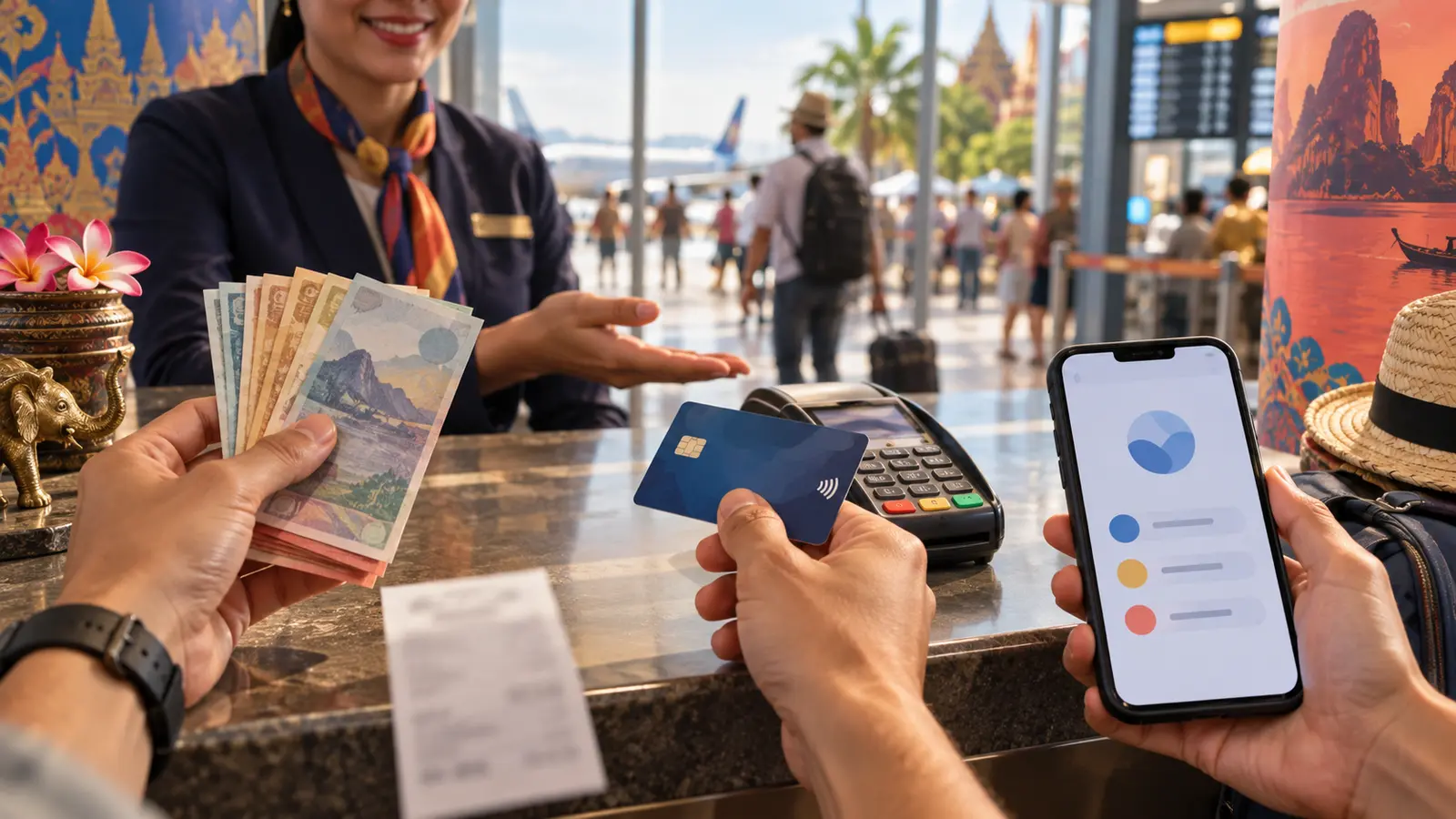
How exchange-rate changes reach everyday life
A stronger currency makes foreign currency cheaper for residents, which can lower the local cost of imported goods, overseas tuition and travel. Exporters may receive less domestic currency for the same foreign sale, making price competition harder.
A weaker currency can support some exporters and tourism, while raising the cost of imports and foreign-currency debt. Effects differ by household and business. A farmer using imported fertiliser may face higher costs even if exported crops earn more.
The change does not arrive everywhere at once. Retailers may have old inventory, firms may hedge their currency exposure and long contracts may fix prices. In food markets, currency and fuel costs interact with harvests and access, as SOAKJAM’s guide to climate change and food security explains.
Why short-term exchange rates are hard to predict
Every public forecast competes with other forecasts. If many traders expect a central-bank move, they act before the announcement and push the expected effect into today’s price. Only the surprise should cause a fresh adjustment—and even that can be interpreted in several ways.
Models that explain long-run relationships often have weak short-run timing. Exchange rates respond to global funding, positioning, automated orders and news that no model can know in advance. A plausible story is not a guaranteed trading strategy.
For a household payment, reducing avoidable fees and timing risk is usually more controllable than predicting the best minute. For a business with meaningful exposure, regulated financial and accounting advice may be appropriate. This article explains mechanisms; it is not a recommendation to trade currencies.
A practical checklist for converting money
- Compare the total amount received, not a fee advertised separately from the rate.
- Confirm whether the quote is guaranteed and for how long.
- Check card, ATM and intermediary-bank fees.
- Verify the recipient’s currency and bank details through a trusted channel.
- Use a regulated provider appropriate to your country and purpose.
- Avoid unlicensed dealers and pressure to send funds urgently.
- For a large future payment, consider splitting conversions to reduce dependence on one day, after obtaining suitable advice.
Frequently asked questions
Who sets a floating exchange rate?
No single dealer sets it. Prices emerge from transactions among banks, businesses, investors and other participants. Central-bank policy can influence demand without directly choosing every market quote.
Does a higher interest rate always strengthen a currency?
No. The result depends on expectations, inflation, risk and what other central banks are doing. A high rate may compensate for danger rather than signal strength.
Why does my bank’s rate differ from the online rate?
Online pages may display a wholesale reference. Retail providers include a spread and may charge separate service, card or ATM fees.
Can a government stop a currency from moving?
It can peg or manage the official rate using reserves, policy and controls. Maintaining that rate has costs, and a parallel market can emerge if demand cannot be met officially.
Is a strong currency always good?
No. It can reduce import costs and help travelers while making exports less competitive and lowering the home-currency value of overseas earnings. Different groups experience the change differently.
What is the best day to exchange money?
No calendar rule reliably identifies it. If the payment is necessary, compare transparent total costs and manage the risk of delay rather than relying on a social-media prediction.
Why do currency exchange rates change? A moving comparison
Why do currency exchange rates change? Because an exchange rate is a live comparison between two monetary systems. Every shift in expected returns, prices, trade, investment, policy or confidence can change how urgently people want one currency rather than the other.
The movement is not a national scorecard. A rising currency can create winners and costs, while a falling one can help some exporters and hurt households that depend on imports. The same news can also mean different things at different moments because markets trade expectations.
For everyday users, the practical lesson is modest: read the direction of the quote, distinguish the market reference from the retail offer, compare the full amount and distrust anyone who promises a risk-free forecast.
Sources and further reading
- Bank of England — Who sets exchange rates?
- European Central Bank — What is the role of exchange rates?
- International Monetary Fund — Choice of Exchange Rate Arrangement
Transparency
Sources & references
- European Central Bank — The ECB’s enhanced effective exchange rate measures
- International Monetary Fund — Exchange Rate Regimes: Fix or Float?
- Bank for International Settlements — Foreign exchange markets in Asia-Pacific
- Consumer Financial Protection Bureau — What types of fees do prepaid cards typically charge?
Editorial review pending
Editorial information
SOAKJAM articles are designed for clarity, useful context and transparent sourcing. Important facts should be checked against the linked primary sources.
Found an error, outdated detail or a useful source we should consider?